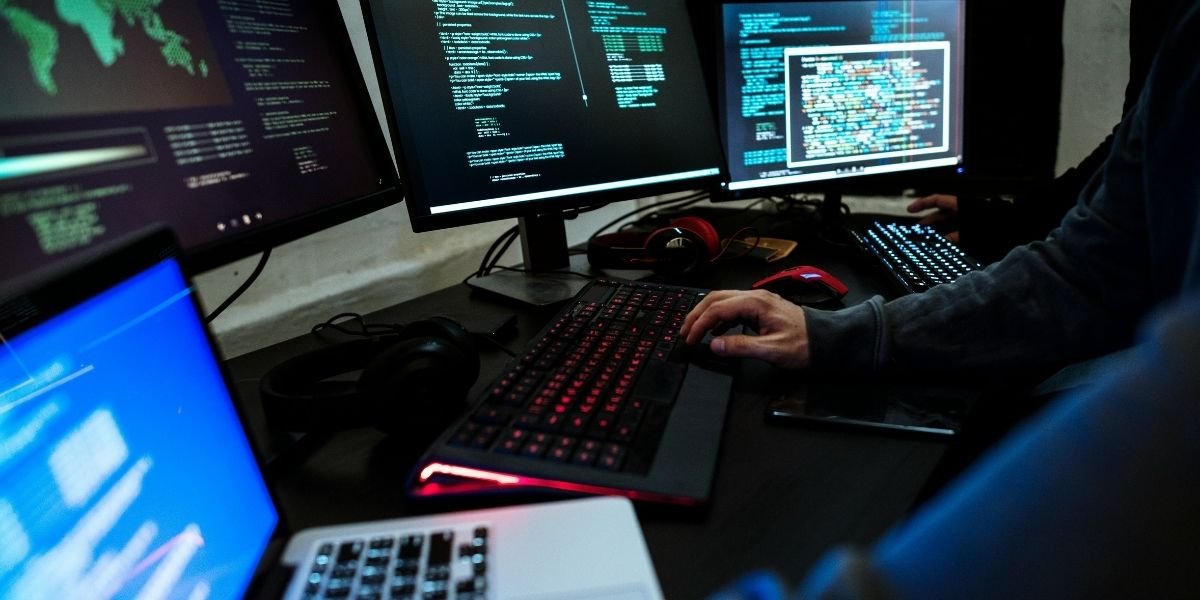
Foster City to Declare State of Emergency After Major Cyberattack

Foster City, a community located in the Bay Area of California, has declared a state of emergency following a devastating ransomware attack that compromised the city’s municipal networks on March 19, 2026. Officials confirmed the breach disrupted a wide range of public services, including systems related to public records, permitting, and community programming. Despite these significant disruptions, essential emergency services, including 911 dispatch and police operations, have remained fully operational.

City leaders acted quickly to secure the necessary state and federal support for restoring vital services and improving cybersecurity resilience. The declaration of a state of emergency is intended to help expedite the recovery process and access resources that can aid the city’s response to the attack.

Scope of the Ransomware Attack

The ransomware attack struck on the morning of March 19, 2026, leaving Foster City’s municipal networks severely compromised. The attack primarily targeted systems that control records management, permitting services, and community programs, effectively paralyzing a significant portion of the city’s online operations. Several non‑emergency services, such as the processing of permits and licenses, were shut down as a precautionary measure to safeguard resident data and minimize further risk.

Although public-facing services like the city’s website and access to non‑essential records were taken offline, emergency services, including law enforcement and fire dispatch, were unaffected. The city’s leadership reassured residents that public safety was not compromised and that emergency personnel were still responding to calls for assistance.

City officials have not disclosed whether any sensitive public information was accessed during the breach. Investigations are ongoing to determine whether personal data or other confidential material was exposed. As of now, the full extent of the data breach has not been confirmed. Local authorities have urged residents to take precautionary steps by securing their personal information, including updating passwords and monitoring accounts for any unusual activity.

State of Emergency Declaration

In the wake of the cyberattack, Foster City officials moved swiftly to declare a formal state of emergency. This declaration serves as a critical legal and logistical tool that allows the city to access state and federal resources, including financial aid and technical support, to assist in the recovery process. It also grants the city the authority to bring in specialized cybersecurity experts who can assist in restoring the affected systems more efficiently.

The state of emergency declaration is seen as a necessary measure to stabilize operations and reassure residents that their safety and well-being remain top priorities. It also highlights the severity of the situation, as municipal officials emphasized that the city would spare no effort in addressing the cybersecurity breach and minimizing its impact on public services.

Although the state of emergency is primarily a precautionary step, officials have indicated that it is critical for managing the long-term recovery process. Foster City’s leadership is working closely with state agencies and federal partners to implement strategies for both the immediate restoration of services and for strengthening cybersecurity infrastructure moving forward.

Impact on City Residents

Residents of Foster City have been directly impacted by the cyberattack, which has forced the temporary suspension of several non‑emergency municipal services. Systems responsible for processing permits, licenses, and records have been rendered inoperative. As a result, residents have experienced delays and interruptions in accessing city services that would typically be available online.

Despite the disruptions, city officials have emphasized that essential services continue to operate normally. 911 dispatch and police operations have remained unaffected by the cyberattack, ensuring that residents can still rely on law enforcement and emergency medical services in urgent situations. Emergency responders and other critical services have been functioning without interruption.

While the ransomware attack has had a significant impact on administrative functions, residents have been reassured that public safety has not been compromised. However, there remains uncertainty surrounding the extent of any potential data exposure. Investigators are continuing to assess whether any personal information was stolen or accessed during the attack. In the meantime, city officials are advising residents to take proactive steps to protect their personal data.

Foster City’s Response to Growing Cybersecurity Threats

The ransomware attack on Foster City is part of a growing trend of cyberattacks targeting local governments across the United States. Municipalities, often operating with limited cybersecurity budgets and relying on legacy systems, remain highly vulnerable to cybercriminals seeking to exploit weaknesses in municipal networks.

Foster City’s decision to declare a state of emergency reflects the increasing urgency with which local governments must address these cybersecurity threats. The city’s leadership has acknowledged that local governments face heightened risks due to their reliance on outdated technology and underfunded IT departments. In light of this attack, officials have committed to prioritizing the modernization of the city’s cybersecurity infrastructure to better protect against future incidents.

Experts note that the frequency and severity of ransomware attacks targeting local governments are on the rise. Many municipalities, including Foster City, are now taking proactive measures to ensure that cybersecurity becomes a priority in city governance. As more cities experience these types of attacks, the need for robust digital defenses and rapid response protocols becomes even more critical.

Foster City’s action to declare a state of emergency is indicative of how seriously officials are taking the breach. While similar actions have been taken in other municipalities facing ransomware attacks, the formal declaration in Foster City is a notable step in addressing the increasingly complex issue of cybersecurity in public administration.

Recovery Outlook for Foster City

As Foster City’s IT teams work around the clock to restore services, officials have cautioned that full recovery may take longer than anticipated. While emergency services are fully operational, the restoration of administrative functions is expected to be a gradual process. City leaders have stressed that every effort is being made to expedite the recovery, but they are also preparing for potential delays due to the complexity of restoring affected systems.

Outside consultants specializing in cybersecurity are assisting the city’s IT staff to assess the scope of the damage and implement a long-term strategy for securing the city’s infrastructure. The primary goal is to ensure that all systems are fully restored to functionality and that data security vulnerabilities are addressed as part of the recovery process.

Looking ahead, city officials have made it clear that cybersecurity will be a top priority. They have acknowledged that the digital infrastructure of local governments needs to be as resilient as physical infrastructure in safeguarding the well-being of communities. As part of the recovery process, Foster City plans to implement enhanced security measures to bolster the city’s defenses against future cyberattacks.


From Visibility to Credibility: How Liberty Press Helps Brands Win in the Trust Economy

In today’s rapidly evolving digital landscape, the rules of marketing and brand building have fundamentally changed. Consumers are no longer easily influenced by traditional advertising or promotional messaging. Instead, they are increasingly guided by trust, credibility, and third-party validation. This shift has given rise to what industry experts call the “trust economy,” where reputation carries more weight than visibility.

At the center of this transformation is Liberty Press, a global public relations and media marketing company that is helping businesses adapt to this new reality. By focusing on credibility-driven strategies and strategic media placement, Liberty Press is redefining how brands build influence, authority, and long-term success.

The Shift from Advertising to Trust

For decades, advertising dominated the business landscape. Companies invested heavily in campaigns designed to capture attention and persuade consumers. While these methods once proved effective, the rise of digital media and information accessibility has dramatically altered consumer behavior.

Modern consumers are more informed than ever. Before making decisions, they research brands, read articles, and seek out independent opinions. They are aware that advertisements are designed to sell, which often leads to skepticism. As a result, they place greater trust in editorial content, media coverage, and expert insights.

This shift has created a new marketing reality:
Trust is no longer optional; it is becoming essential.

Brands that fail to establish credibility may struggle to connect with their audiences, while those that prioritize trust may gain a competitive advantage.

Liberty Press: Building Credibility Through Media

Liberty Press has positioned itself as a leader in this new environment by focusing on what truly matters: placing clients in trusted media ecosystems.

With access to hundreds of media outlets worldwide, Liberty Press enables businesses to be featured in reputable publications where audiences already seek reliable information. These placements are not simply about exposure; they are about association with credibility.

When a brand appears in a respected publication, it benefits from the trust that the publication has built with its audience. This can create an immediate shift in perception, positioning the brand as legitimate, authoritative, and worthy of attention.

Unlike traditional advertising, which is controlled by the brand, media coverage provides third-party validation. This validation is often more persuasive because it is perceived as objective and unbiased.

The Power of Strategic Storytelling

A key component of Liberty Press’s success is its emphasis on journalism-style storytelling.

Rather than creating content that feels promotional, Liberty Press crafts narratives that inform, engage, and inspire. These stories focus on the deeper aspects of a brand, including:

  • The founder’s journey
  • The company’s mission and vision
  • The challenges overcome
  • The impact on customers and communities

This storytelling approach can transform businesses into relatable and meaningful narratives. It allows audiences to connect with brands on an emotional level, which is important for building trust.

In a crowded marketplace, where consumers are constantly bombarded with messages, stories stand out. They can create lasting impressions and foster genuine engagement.

Why Credibility Drives Business Growth

Credibility is more than just a marketing advantage; it can be a growth driver.

When consumers trust a brand, they are more likely to:

  • Engage with its content
  • Choose its products or services
  • Recommend it to others

This trust also reduces friction in the decision-making process. Instead of questioning the brand’s legitimacy, customers often feel more confident in their choices.

Liberty Press helps businesses leverage this dynamic by encouraging consistent media exposure across credible platforms. Over time, this can build a strong reputation that supports sustainable growth.

Additionally, media coverage contributes to digital visibility. Articles published online remain accessible and searchable, enhancing a brand’s presence in search engine results. This creates a compounding effect, where credibility can lead to visibility, and visibility reinforces credibility.

The Limitations of Traditional Advertising

The decline of traditional advertising is not due to its disappearance, but rather its diminishing influence.

Consumers today are exposed to thousands of advertisements daily, leading to ad fatigue. Many actively ignore promotional content, skip ads, or use tools to block them altogether.

More importantly, there is a growing awareness that advertisements present a one-sided perspective. This has led consumers to seek more balanced and reliable sources of information.

Editorial content, on the other hand, offers context, depth, and analysis. It is often perceived as more trustworthy, making it more effective in shaping opinions.

Liberty Press recognizes this shift and focuses on strategies that align with how modern audiences consume information, through trusted media rather than direct promotion.

Consistency: The Key to Long-Term Trust

Building trust is not a one-time effort; it requires consistency.

A single media feature can create awareness, but ongoing exposure is what helps build authority. Liberty Press supports clients through continuous PR strategies that help maintain visibility in credible environments.

This consistent presence can reinforce a brand’s reputation and help ensure that it remains relevant in the eyes of its audience.

Over time, this approach can transform brands into recognized and trusted entities within their industries.

The Future of PR in the Trust Economy

As the trust economy continues to evolve, the role of public relations is becoming increasingly important.

In this new landscape:

  • Credibility is at the foundation of success
  • Storytelling is the primary tool of engagement
  • Media is the channel through which trust is built

Businesses that understand and embrace these principles may be better positioned to succeed in the long term.

Liberty Press represents the future of PR, one that prioritizes authenticity, strategic storytelling, and meaningful media placement.

Summary

The rise of the trust economy marks a significant turning point in how businesses communicate and grow. Consumers are no longer influenced solely by advertising; they are guided by credibility, authenticity, and trusted sources.

Liberty Press has successfully aligned its approach with this new reality, helping brands transition from visibility-driven marketing to credibility-driven influence.

In a world where attention is limited and competition is intense, the brands that succeed are likely not those that speak the loudest but those that are trusted the most.

Media Features

Media Recognition and Leadership Authority

Dr. Sarah Sun Liew, the founder behind Liberty Press and Meridian Wish initiatives, continues to gain national and international recognition for her leadership, innovation, and commitment to empowering entrepreneurs through education and media exposure.

AP News Press Release: https://apnews.com/press-release/marketersmedia/dr-sarah-sun-liew-announces-prestigious-business-leadership-award-and-new-media-features-091f4ece6e7a8e9b0488695f6876de1f

The US Journal Feature: https://www.theusjournal.com/entrepreneur/the-leaders-to-watch-in-2026-top-15-entrepreneurs-building-legacies-that-last/

Author Profile: https://wikitia.com/wiki/Dr._Sarah_Sun_Liew

Contact Information

Phone: (424) 343-7025

Email: info@meridianwish.com

Website: https://www.meridianwish.com

Toronto’s deepidv Expands to San Francisco, Bringing AI-Powered Verification, TripleLock Protocol and Anti-Deepfake Technology to U.S. Markets

By: Sahil Sachdeva

The Canadian startup’s 8-inch tabletop device delivers physical identity verification in under  3.2 seconds — and it’s built to stop deepfakes at the door. 

SAN FRANCISCO, CA — As deepfake fraud costs businesses billions annually and identity theft continues to surge across North America, a Toronto-born startup is planting its flag in San Francisco with a bold answer: real-time, AI-native identity verification that works both online and in person. 

deepidv, a fast-growing identity verification and anti-fraud platform, has officially expanded its operations to San Francisco as it scales across the United States. The company offers a comprehensive suite of digital identity verification, fraud prevention, and anti-deepfake detection tools — but its flagship physical product, deepcam, is turning heads in the SMB and  SME space. 

What Is deepcam and Why It Matters for Small Business Security 

deepcam is an 8-inch tabletop identity verification and access control device developed entirely in-house by deepidv’s engineering team. Designed specifically for small and mid-sized businesses — hotels, gyms, liquor stores, and casinos — the device completes a full identity verification in under 3.2 seconds, combining document authentication, facial matching, and deepfake detection into a single, sleek hardware unit. 

“We built deepcam because the businesses that need identity verification the most — the local hotel checking in a guest, the liquor store verifying age, the casino monitoring access — have been priced out or overlooked by enterprise-only providers,” said Shawn-Marc Melo,  Founder and CEO of deepidv. “Our mission has always been to democratize identity security. deepcam puts institutional-grade fraud prevention directly on the countertop of every  small business in America.” 

Unlike software-only solutions that require customers to download apps or navigate clunky web portals, deepcam is a turnkey physical device. Businesses plug it in, connect it, and begin verifying identities immediately. The device performs real-time document scanning, biometric facial comparison, and AI-driven liveness detection to ensure that the person standing in front of it is who they claim to be — and not a deepfake. 

Beyond Verification: Full-Spectrum Fraud and Anti-Deepfake  Detection 

What sets deepidv apart in the crowded identity verification market is its emphasis on fraud prevention and deepfake detection as core capabilities — not afterthoughts. While many competitors focus narrowly on document checks or facial matching, deepidv has built an AI native engine that actively identifies synthetic media, manipulated documents, and presentation attacks in real time. 

“Identity verification without deepfake detection is incomplete in 2026,” said Omar Tahir,  CTO of deepidv. “The threat landscape has changed. Fraudsters are using generative AI to create hyper-realistic fake IDs, synthetic faces, and deepfake videos. Our technology doesn’t just 

check if an ID looks real — it interrogates every pixel and every biometric signal to determine  whether what it’s seeing is authentic or manufactured.” 

deepidv’s platform leverages proprietary anti-deepfake models trained to detect AI-generated images, face swaps, and replay attacks across both its digital and physical verification channels.  This dual capability — online and in-person — positions the company uniquely in the identity security space. 

Why San Francisco? A Strategic Move for a Global Ambition 

deepidv’s expansion from Toronto to San Francisco is more than a change of address. The move positions the company at the epicenter of AI innovation and venture capital, with direct access to enterprise customers and channel partners that will drive its next phase of growth. 

“San Francisco is where the frontier of AI meets the infrastructure of trust,” said Joey Chan,  COO of deepidv. “We’re not just moving to the Bay Area — we’re bringing a product that San  Francisco’s hospitality, retail, and entertainment industries need right now. The demand for  physical identity verification with anti-fraud intelligence is massive and growing.” 

The company currently operates in Toronto, San Francisco, and Dallas, with a growing team of engineers, designers, and go-to-market specialists building what they describe as the most comprehensive AI-native identity platform on the market. 

What’s Next for deepidv 

With its San Francisco presence now established, deepidv is focused on accelerating deepcam  distribution to hotels, gyms, casinos, and retail locations across the United States. The company  is also expanding its online identity verification and fraud detection tools to serve fintech,  proptech, and HR verticals. 

“Every feature we ship, every model we train, is built in-house,” said Luka Piplica, Head of  Development at deepidv. “That’s what gives us speed and control. We’re not stitching  together third-party APIs — we own the stack from the silicon to the software, and that’s a major  advantage when you’re fighting deepfakes in real time.” 

For more information about deepidv and deepcam, visit  

https://www.deepidv.com 

Media Contact: 

Deep Identity Inc. | press@deepidv.com | deepidv.com


Disclaimer: The information provided in this article is for informational purposes only. deepidv does not guarantee any specific outcomes or financial returns related to the use of its products. All claims regarding identity verification, fraud prevention, and anti-deepfake technology should be independently verified. Business owners and investors should conduct their own research and consult with relevant professionals before making any decisions. Metrics and pricing mentioned may vary based on market conditions and other factors.