Jean-Pierre Conte on What The Bay Lights Remind Us About What Cities Are For

By: Zach Miller
A philanthropist’s funding decision opens a larger question about shared experience, urban identity, and what a city chooses to protect.
Cities generate no shortage of metrics. Employment figures, office vacancy rates, transit ridership, housing starts, and the instruments for measuring urban health are well-established and widely reported. What they tend not to capture is the harder-to-quantify condition of a city that its residents actually feel: whether the place seems worth caring about, whether it offers something beyond functional necessity, and whether its public spaces carry shared meaning.
Jean-Pierre Conte, managing partner of family office Lupine Crest Capital, has spent years making philanthropic bets on that harder-to-measure dimension of public life. His $5 million contribution to UCSF established two endowed professorships for Parkinson’s and neurodegenerative disease research. His $25 million gift to Colgate University will fund a campus social center built for students he will never meet. The Conte First Generation Fund, active at eleven universities, provides scholarships and mentorship for first-generation college students. Each of those commitments treats something beyond immediate financial utility as worth sustained investment.
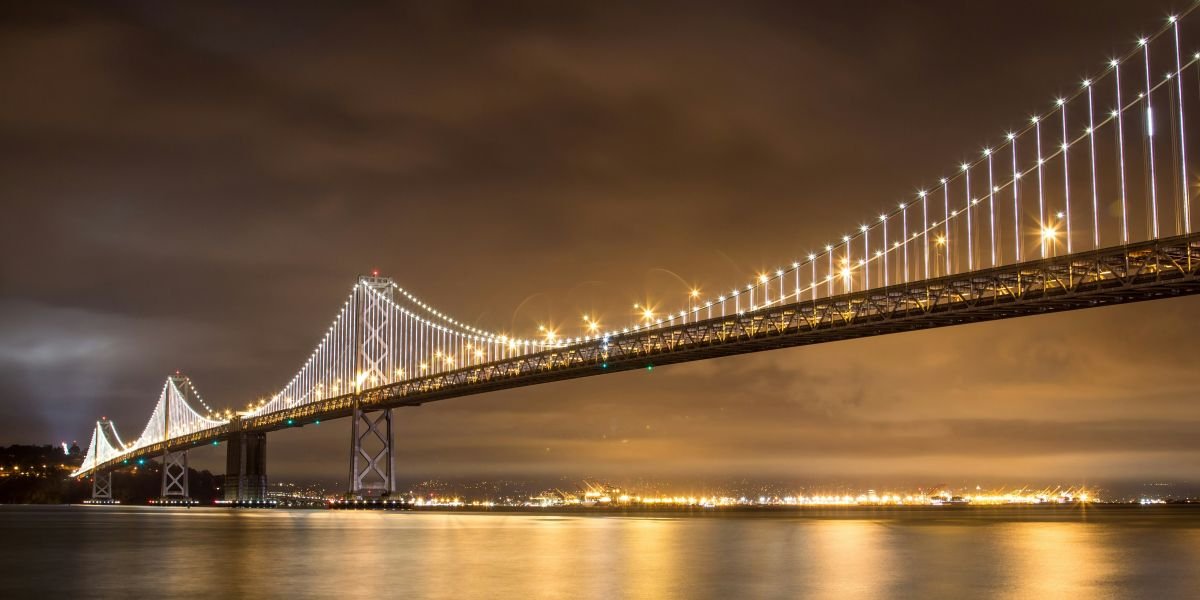
His continued support for The Bay Lights belongs to the same category. Illuminate, the San Francisco nonprofit behind the project, announced in February 2026 that the installation by artist Leo Villareal would return to the western span of the San Francisco–Oakland Bay Bridge with a Grand Lighting on March 20, 2026. The $11 million rebuild, a full engineering replacement, not a repair, was funded entirely through private philanthropy, drawing on more than 1,300 contributors and no public subsidy. Jean-Pierre Conte, a key funder of the original installation in 2012, committed to the restored project.
“Supporting The Bay Lights has always been about investing in the soul of San Francisco,” Conte said in Illuminate’s announcement. “This is a gift to the public; a reminder that wonder still belongs in the center of civic life.”
“This bridge and this lighting structure could become the heartbeat of the city, and it may become iconic,” Conte said in an interview with ABC7.
How an Artwork Becomes Part of a City’s Identity
Public landmarks tend to earn their place in a city’s identity gradually. A bridge, a skyline silhouette, a neighborhood’s particular character, these accumulate meaning through repeated encounters over years, not through a single opening-night ceremony. What The Bay Lights did, beginning with its 2013 debut, was add a new kind of landmark to San Francisco’s civic vocabulary: not a static structure but a nightly event, one that changed with weather and time and could not be experienced identically on two separate occasions.
That temporal quality was central to how artist Leo Villareal described the work’s relationship to the city. “I think of The Bay Lights as a way of making invisible systems visible,” Villareal said in Illuminate’s February 2026 announcement. “The bridge is already full of rhythm, traffic, weather, motion, and time, and the light responds to that complexity through abstraction. It’s not about decoration. It’s about revealing the pulse of its location.”
That phrase, “the pulse of its location,” describes something precise: the installation does not add a foreign identity to the bridge but draws out what is already present in its movement, its exposure to the elements, and its daily function as a crossing point for tens of thousands of people.
“The Bay Lights have become an iconic symbol of San Francisco and the entire Bay Area,” San Francisco Mayor Daniel Lurie said. “I’m thrilled to welcome back the light installation that could once again bring beauty and pride to our city and the whole region.” The March 20 Grand Lighting date was also selected to honor the 92nd birthday of Willie L. Brown, the former San Francisco mayor for whom the bridge’s western span is formally named.
The Civic Argument for Private Cultural Generosity
American cities have largely delegated the funding of large-scale public art to private donors. Municipal budgets carry competing demands that rarely leave room for an $11 million LED installation on a bridge. The Bay Lights has operated outside public financing since its first appearance in 2013, and its 2026 restoration followed the same model: wholly privately funded, with no government subsidy at any level.
That arrangement clarifies what donors to the project are actually committing to. The Bay Lights will never charge admission. No naming opportunity attaches to the cable plane. No revenue will flow back to its funders. What the project generates, nightly from dusk until dawn, is a shared experience available to every person who happens to be near the Bay, whether they know a donor’s name or not.
For Jean-Pierre Conte, whose giving record consistently favors this kind of durable public benefit, the decision to fund The Bay Lights a second time fits a recognizable logic. A gift to endow a university professorship or sustain a first-generation scholarship fund operates the same way: the donor steps back, and the work proceeds on its own terms, for people who never participated in the original funding decision.
The 2026 restoration extends the project’s reach through a feature called TBL360, an additional LED configuration on the inward-facing side of the northern cable plane, designed to bring the artwork’s visibility to Bay Area communities that previously had limited sightlines to the bridge. Once fully operational, Illuminate projects the installation could be experienced by more than 20 million residents and visitors each year.
Jean-Pierre Conte’s sustained commitment to The Bay Lights across more than a decade, through a full system failure and a ground-up rebuild, suggests that a city’s character and wonder may be worth supporting.