San Francisco Childcare Program Expands Free Access for Families

San Francisco has announced a major expansion of its childcare program designed to help reduce the financial burden on families. The new initiative, set to launch in January 2026, will offer free childcare for families earning up to $230,000 annually. For families with incomes between $230,000 and $310,000, the city will provide a 50 percent subsidy to help cover childcare costs. The program aims to make quality childcare accessible for more families, especially in a city where living costs are among the highest in the nation.

This expansion is one of the most ambitious efforts to tackle affordability issues in San Francisco’s history. By increasing the income thresholds for eligibility, the city hopes to provide relief to thousands of families who face high childcare expenses, which are often a significant financial challenge. The new program is expected to make a positive impact, allowing more children to benefit from early childhood education and care.

Funding and Sustainability of the Childcare Initiative

The program is funded through the commercial rent tax, which was approved by voters in 2018. Revenue from this tax is being used to support the childcare program and ensure its longevity. Officials have confirmed that unspent funds from the tax will help maintain the program until 2032, providing assistance to approximately 20,000 children in San Francisco.

The tax revenue provides a stable financial foundation for the program, allowing it to offer ongoing assistance to families without placing additional strain on other public services. The ability to secure funding through this tax also removes the need to rely on fluctuating budgets or temporary grants, making the program more sustainable in the long term.

Eligibility Requirements and Benefits for Families

Under the new program, families earning less than $230,000 annually will be eligible for free childcare for children under the age of five. Those with incomes between $230,000 and $310,000 will receive a 50 percent subsidy to help cover the cost of care. The expanded program is designed to meet the needs of middle- and upper-middle-income families, who often struggle with the high costs of childcare in the Bay Area.

The eligibility thresholds are tailored to reflect the high cost of living in San Francisco, where housing, food, and other essentials are expensive. By adjusting these thresholds, the city recognizes the challenges even higher-earning families face in providing affordable care for young children. This expansion helps ensure that more families have access to affordable, high-quality childcare services.

Alleviating Childcare Costs for San Francisco Families

Childcare in San Francisco is known for being one of the most expensive in the nation, with many families spending over $20,000 per child annually. The new program aims to significantly reduce or completely eliminate these costs for qualifying families, providing much-needed relief. Families who qualify for the free childcare benefit could save thousands of dollars each year, helping them redirect resources to other pressing needs, such as housing, education, or savings.

For many working parents, the cost of childcare has been a major barrier to remaining in San Francisco. This program could make the difference between families staying in the city or relocating to areas with more affordable living costs. Free or subsidized childcare offers stability for families, allowing them to stay in their communities while maintaining their careers.

Supporting Early Childhood Education and Development

In addition to financial relief, the program also aims to support children’s development. Access to quality childcare ensures that young children receive important early education, socialization, and emotional support during their formative years. High-quality care during these early years is crucial for cognitive and social development, helping children thrive in school and beyond.

For parents, the program offers peace of mind, knowing their children are in a safe and nurturing environment while they work. It also provides families with access to early learning programs that they might not have been able to afford otherwise. This support is seen as a critical component of ensuring that all children, regardless of their family’s income, have the opportunity to succeed.

Economic and Community Benefits for San Francisco

While the program will reduce childcare costs for families, it is also expected to have a broader impact on local communities. The influx of families taking advantage of the free or subsidized childcare services will benefit local businesses, including restaurants, shops, and hotels near participating parks and centers. The increased foot traffic and business activity could provide a boost to the local economy, particularly in neighborhoods with large numbers of eligible families.

Socially, the program is expected to contribute to greater equity in San Francisco by ensuring that families from all income levels have access to affordable childcare. This accessibility helps families stay in San Francisco and strengthens community bonds by ensuring that children can grow up in the city. Additionally, by offering support for parents, the program helps reduce stress and improves overall quality of life for working families.

Preparation for Program Implementation

The expanded childcare program is set to begin in January 2026, with the subsidies for families earning between $230,000 and $310,000 expected to expand by fall of the same year. Families will be able to apply for the program through city channels, with eligibility based on income verification. Officials are working to make the application process as smooth as possible, ensuring that eligible families can easily access the benefits.

Childcare providers across San Francisco are preparing for the increased demand. Partnerships with licensed centers and home-based providers are being expanded, and training programs will be put in place to maintain high standards of care and quality. Volunteers and city staff will assist with the application process, ensuring families are aware of how to apply and what benefits they are eligible for.

Disclaimer:
The information presented in this article is based on the latest available public reports and official announcements regarding the expansion of San Francisco’s childcare program. Details about eligibility, funding, and program implementation are subject to change based on future policy updates or additional government decisions. The final interpretation of program terms and eligibility should be confirmed through official San Francisco city channels.
From Collapse to Connection: How Jenn Noble Is Changing the Way We Think About Communication

By: Jordan Wells

There is a new voice emerging in the world of attachment and communication, one that is reshaping how people understand connection. Across social media, podcast platforms, and speaking stages, Jenn Noble’s work is gaining traction for its grounded, somatic-based approach to communication and for her clarity, candor, and refusal to sugarcoat what real change may actually require.

Jenn is an ICF-credentialed relationship coach with advanced training in attachment-informed and somatic-based approaches to communication and emotional regulation. Her work bridges nervous system science, relational psychology, and real-world practice, offering a framework that feels both deeply human and easily applicable. It is this combination of credibility and accessibility that has positioned her as a leading voice in a growing conversation about what communication could actually require.

But Jenn did not begin her work from a place of authority or certainty.

In the middle of the pandemic, she was not building a brand or mapping out a business plan. She was a single mother doing her best to stay afloat while everything around her seemed to be falling apart. Survival became the focus, and the emotional toll of holding everything together grew impossible to ignore.

What made that moment pivotal was not the stress itself, but the clarity that followed. In the quiet aftermath of simply getting through each day, Jenn began to see that nothing in her life might change if she stayed disconnected from herself.

That realization shifted how she understood communication, not as something that happens once the words come out, but as something shaped long before anyone speaks. It marked the beginning of a shift that would slowly take form through her podcast, bestselling book, TEDx talk, and coaching academy, all rooted in one core belief about what could make change possible:

Communication does not start with what you say. It starts with how safe you feel inside your own body.

That idea now sits at the center of everything Jenn builds, teaches, and speaks about. But it was born from lived experience, not theory. Before she ever taught communication, she had to learn what safety felt like in her own nervous system. Before she helped others change their patterns, she had to face her own.

What followed was not a straight line from collapse to success. It was a process of rebuilding trust with herself, learning to stay present under stress, and discovering why insight alone does not necessarily create change. Along the way, Jenn began to see something that most conversations about communication were missing. We focus on words, strategies, and scripts, but rarely on the internal conditions required to actually use them. That realization gradually changed the direction of her work and quietly laid the groundwork for what would become Speak Honest.

When Insight Was Not the Problem

As Jenn began coaching, she noticed a pattern that kept repeating. The women coming to her were smart, capable, and deeply self-aware. Many had spent years in therapy. They could name their attachment styles, identify their triggers, and explain exactly what they wanted to change. And yet, when emotions ran high, they still found themselves reacting in ways that felt familiar and frustrating.

Jenn realized that most people were being taught to communicate as if it were purely cognitive. Say the right thing. Use the right words. Follow the right script. But in real life, communication happens in the body first. When the nervous system does not feel safe, clarity often disappears, defensiveness may increase, and even the most well-intentioned conversations can fall apart.

One client described it this way. “I knew exactly what I wanted to say to my partner, but the moment he looked at me, my chest tightened, and my mind went blank. I thought something was wrong with me. Working with Jenn helped me understand that nothing was wrong. My body just didn’t feel safe yet.”

That understanding proved to be transformational.

Building Speak Honest as a Practice Space

Speak Honest was never meant to be a place where people learned what to say and then went off on their own to try it. Jenn built it as a practice space. A community where women could slow down, notice their internal responses, and learn how to stay present instead of spiraling.

The Speak Honest Academy grew out of that intention. Inside the Academy, members learn how to regulate their nervous systems, communicate honestly under pressure, and repair after conflict. The focus is not perfection, it is capacity. Can you stay with discomfort a little longer? Can you notice when your body is signaling danger even when none is present? Can you respond instead of react?

“We don’t change patterns by trying harder,” Jenn says. “We change patterns by practicing differently in environments where we feel safe enough to try.”

From Collapse to Connection: How Jenn Noble Is Changing the Way We Think About Communication

Photo Courtesy: Speak Honest, LLC

The TEDx Talk That Sparked a Book

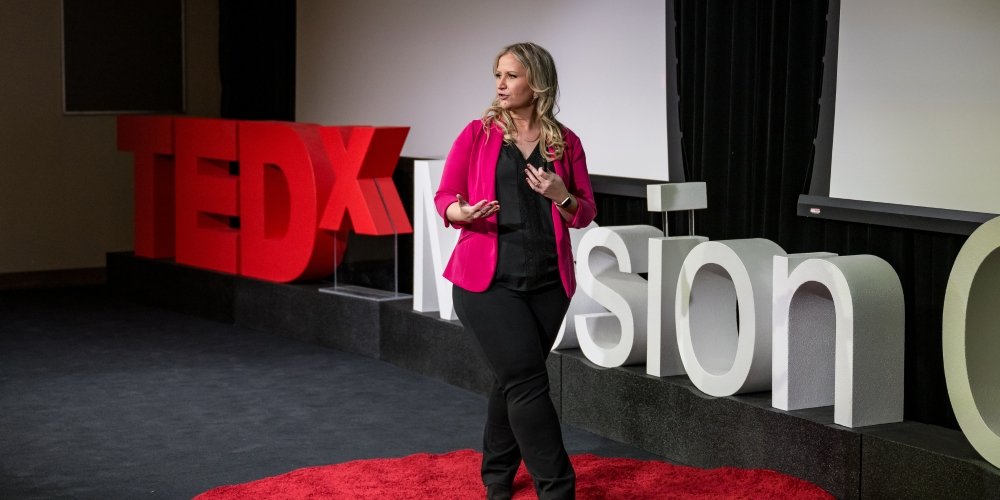
Jenn’s ideas around attachment and communication reached a broader audience in February 2024, when she delivered her TEDx talk at Mission College in Santa Clara, California. In the talk, she explored attachment styles and relationships through the metaphor of dance, illustrating how different attachment patterns move toward, away from, or unpredictably around connection.

The response was immediate. Audience members recognized themselves, their relationships, and their long-standing struggles in the framework. The talk struck a balance between accessibility and depth, offering insight without shame and curiosity without judgment.

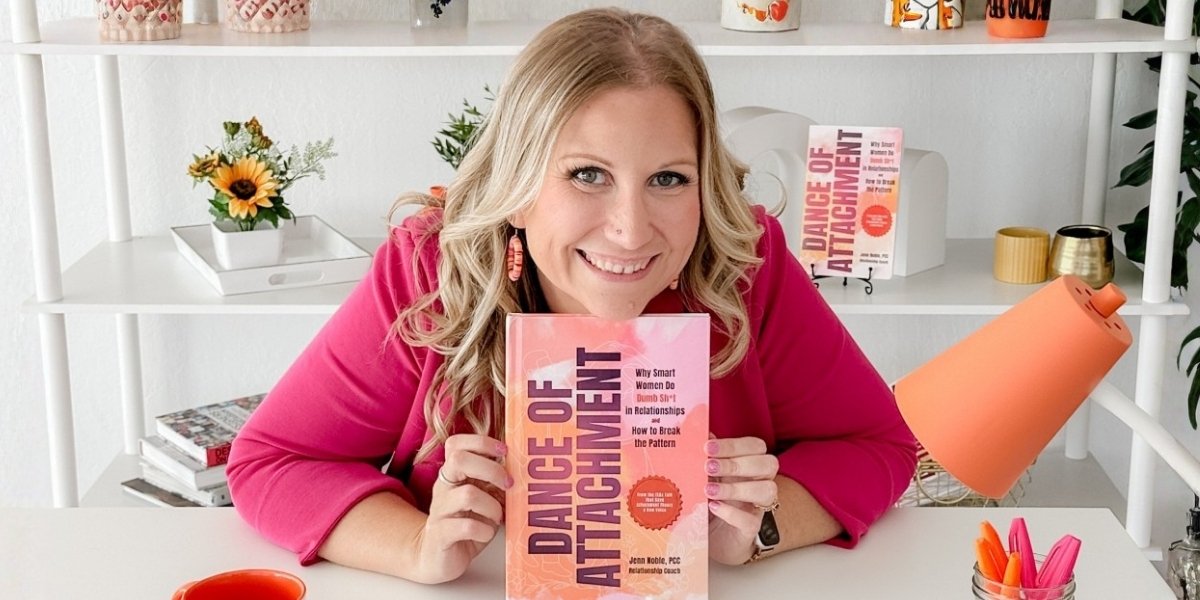
That talk caught the attention of Lucky Book Publishing, who reached out to Jenn and encouraged her to expand the ideas from her talk into a book. That invitation eventually became a turning point, leading to the publication of her bestselling book Dance of Attachment.

Writing the book was both affirming and challenging for Jenn. She wanted it to feel honest without becoming prescriptive, grounded without drifting into clinical language. Rather than positioning attachment patterns as flaws to be fixed, the book walks readers through how these behaviors formed as adaptations shaped by early experiences of safety and connection.

Readers responded deeply to that approach. As one reader shared, “Jenn has a magical gift of being able to make something as heavy as attachment theory feel human, hopeful, and even funny.”

Dance of Attachment is a bestselling and award-winning book, available on Amazon and Barnes & Noble for readers interested in exploring the work further.

Why This Work Matters Beyond Relationships

While Jenn’s work centers on relationships, its relevance extends far beyond romantic connections. She frequently speaks on stages about how attachment patterns show up at work, in leadership, and within teams. Anxiety, avoidance, emotional shutdown, and over-functioning do not disappear in professional settings. They simply take different forms.

In high-pressure environments like the San Francisco Bay Area, these patterns often go unnamed. Performance is rewarded, emotional regulation is assumed, and communication breakdowns are frequently chalked up to personality conflicts or a lack of skill rather than underlying relational dynamics.

Jenn challenges that assumption. She teaches that psychological safety is not a soft concept. It is a foundational requirement for effective communication and collaboration. Teams that function well are not conflict-free. They are repair-capable. Leaders who inspire trust are not emotionally distant. They are emotionally attuned.

“I see the same patterns at work that I see in relationships,” Jenn says. “People want to communicate well, but their bodies are in protection mode. Until we address that, no amount of strategy will fix the problem.”

From Collapse to Connection: How Jenn Noble Is Changing the Way We Think About Communication

Photo Courtesy: Speak Honest, LLC / Jenn Noble

Speak Up and Speak Honest

What Jenn Noble is building now reaches far beyond any single platform. Through her writing, speaking, and coaching, her work continues to move into larger conversations about leadership, relationships, and emotional intelligence. Those conversations are shaped by Dance of Attachment, her bestselling book, and extended through the Speak Honest Podcast, where she explores attachment, communication, and emotional safety through real-world examples and lived experience.

Those conversations come to life inside the Speak Honest Academy, a coaching space designed to support real practice, helping women move from insight into lived change. As this work continues to expand, Jenn is increasingly invited onto stages to speak about attachment-informed communication and the role safety plays in how people lead, collaborate, and connect, particularly in high-pressure environments where clarity often collapses under stress.

At a time when many conversations prioritize performance, efficiency, and productivity, Jenn’s work offers a different lens. She asks what becomes possible when people feel safe enough to be honest, regulated enough to stay present, and supported enough to repair when communication breaks down.

Jenn Noble’s work was forged when her own life collapsed around her. Out of that hardship came a depth of connection she never imagined possible, and a clarity she now brings into her work across the Bay Area and beyond. Through Speak Honest, she shows women that collapse does not mean connection is lost forever. It means something new is possible. As Jenn often says, “If we learn to speak up and Speak Honest, we can light the way for someone else still stuck in the dark.” Proof that even after a collapse, a connection is still possible.