Bay Area Air Quality Drops as Hazy Skies Blanket Region

Residents across the Bay Area woke to hazy skies, signaling a drop in air quality. Reports indicate the Air Quality Index (AQI) reached moderate and unhealthy levels for sensitive groups, particularly in areas like San Francisco, Oakland, Redwood City, and San Jose. The prolonged period of windless weather trapped pollutants near the ground, creating a dense layer of haze across the region.

Environmental experts noted that stagnant air conditions caused fine particulate matter to accumulate. Without wind to disperse emissions, pollutants from vehicles, wood burning, and industrial activity lingered in the lower atmosphere, resulting in a significant decline in air quality.

Commuters reported decreased visibility on highways, while residents noted a metallic taste in the air. These sensory experiences were confirmed by air quality monitoring stations, which recorded some of the worst air quality conditions in recent months.

Sources of Pollution Affecting Air Quality

The Bay Area’s air quality issues stem from multiple pollution sources. Vehicle emissions remain a primary contributor, especially during peak commuting hours. Additionally, industrial activity from factories and refineries adds to the mix, with pollutants accumulating under stagnant air conditions.

Wood burning, common in colder months, is another significant source of particulate pollution. Fireplaces and outdoor pits release fine particles that can aggravate respiratory conditions. On days without wind, these pollutants remain in the air longer, worsening the problem.

The region’s geography also plays a role. Surrounded by hills and valleys, the Bay Area frequently experiences inversion layers that trap pollutants near the surface. This natural phenomenon amplifies the impact of human activities, particularly during winter months.

Health Risks and Impact on Residents

Medical professionals are concerned about the impact of poor air quality on residents, even when AQI levels are considered moderate. Sensitive groups—such as children, the elderly, and individuals with respiratory or heart conditions—are particularly vulnerable to the effects of air pollution. Exposure to polluted air can lead to asthma attacks, coughing, and shortness of breath.

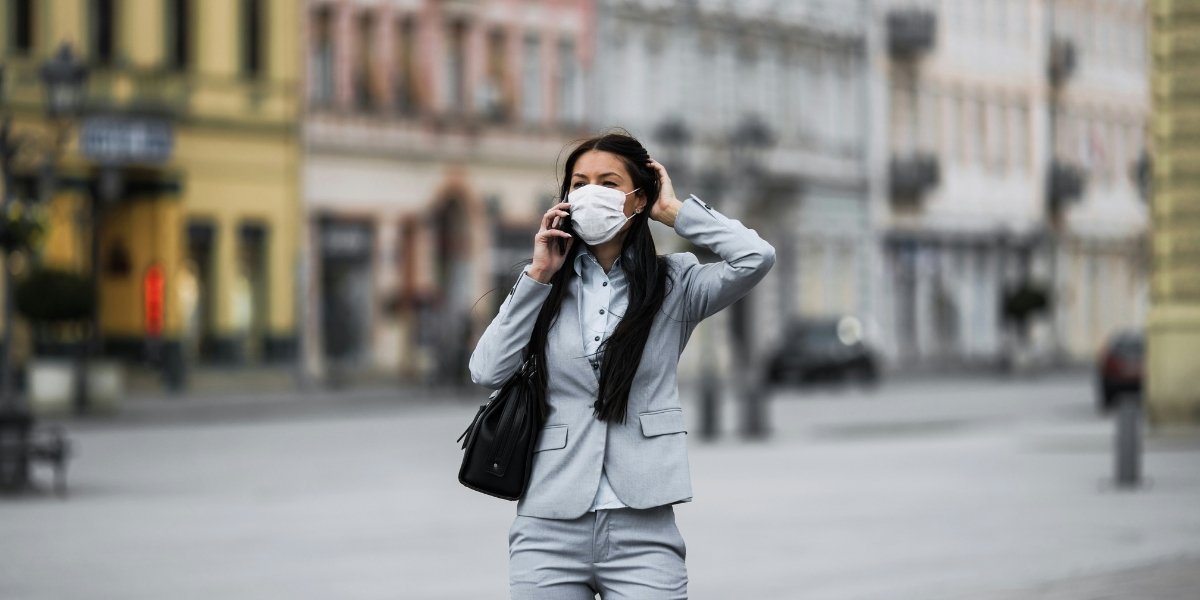
Hospitals have seen an increase in respiratory complaints during similar air quality events earlier in the season. Doctors are advising individuals to limit outdoor activities when AQI levels fall into unhealthy ranges. Masks designed to filter fine particulate matter can help reduce exposure, providing an additional layer of protection.

Public health agencies continue to stress the importance of monitoring air quality reports and adjusting daily activities accordingly. The growing recognition of air pollution’s impact on health has spurred action from both residents and local authorities.

Local Response to Declining Air Quality

Local authorities have issued a Spare the Air alert to address worsening air quality, which includes a ban on residential wood burning. This initiative is part of a broader strategy to reduce particulate emissions during stagnant weather events. Ensuring compliance with these measures is critical to improving air quality, even if the impact is incremental.

Community organizations have stepped up efforts to reduce emissions, using social media platforms to encourage carpooling and public transit use. These grassroots movements aim to help reduce pollution at the neighborhood level, contributing to better overall air quality.

In response to deteriorating air quality, schools have moved recess indoors, and some fitness classes have shifted to virtual formats. These adjustments highlight how local communities are quickly adapting to ensure public health and safety during periods of poor air quality.

Impact on Local Businesses and Tourism

The declining air quality is also affecting local businesses, particularly those that rely on outdoor spaces. Restaurants and cafes that offer outdoor dining are seeing fewer patrons choosing patio seating due to poor air conditions. As air quality worsens, the appeal of outdoor activities in the region diminishes, impacting business revenue.

Tourism officials have acknowledged that while short-term haze episodes rarely deter visitors, prolonged periods of poor air quality can alter perceptions of the Bay Area’s natural beauty. The region is known for its scenic views, but haze can significantly obscure landmarks like the Golden Gate Bridge and the Bay waters, making these iconic sights less visible to tourists.

Despite the challenges, local authorities continue to reassure the public that the Bay Area remains a safe and welcoming destination. The ongoing efforts to mitigate air pollution are designed to maintain the region’s reputation as a top tourism spot, even in the face of environmental challenges.

Addressing Air Quality in the Future

Meteorologists predict that air quality will improve once winds return to disperse pollutants. However, experts warn that extended winter inversions could bring recurring haze episodes throughout the season. The outlook suggests that residents may face similar challenges until weather conditions change.

Air quality officials continue to monitor conditions closely, using real-time data from sensors across the region to provide timely updates. Authorities emphasize transparency and preparedness, with a focus on informing the public and issuing advisories to protect residents during periods of poor air quality.

The increasing frequency of air quality issues underscores the Bay Area’s ongoing struggle with pollution. As urban growth and climate patterns intersect, the region will need to continue adapting to ensure both the health of its residents and the long-term sustainability of its environment.
How to Bring Your Own Internet to Large-Scale San Francisco Events

By: Ethan Rogers

San Francisco events put significant pressure on internet access, especially once doors open. When a venue fills with thousands of attendees, each carrying multiple devices, the network load rises quickly. Badge scanners may start syncing at the same time exhibitors power up demos, staff log into dashboards, and attendees connect before finding their seats. What worked during setup can behave differently once the floor is active.

At conferences such as the Game Developers Conference, Fan Expo, and SEMICON West, even short interruptions can cause visible problems. A delayed upload could back up registration. A brief drop may freeze a live demo or interrupt a media feed. Many organizers rely on venue-provided networks because the published capacity appears sufficient, but those numbers do not always reflect how the network performs when real traffic arrives all at once.

Understanding how to bring your own internet into San Francisco events starts with understanding why venue WiFi struggles once the building fills.

Why San Francisco Venues Struggle Under Real Event Load

Large convention centers such as Moscone are engineered to support many users across many years, not to guarantee consistent performance during short bursts of extreme demand. When an event opens, traffic patterns change rapidly.

Thousands of devices connect within minutes. Badge scanners begin syncing. Exhibitors test demos simultaneously. Attendees upload photos and videos. Press teams push large media files upstream. These actions stack on top of each other, and shared infrastructure feels the pressure immediately.

Another factor is the city itself. According to FCC spectrum monitoring data, downtown San Francisco operates near peak utilization during business hours even without events. Cellular towers already serve dense office buildings, residential units, and street-level traffic. An event adds a temporary surge that towers were never designed to absorb.

Venue WiFi also relies heavily on shared backhaul. Even if access points are plentiful, upstream capacity is divided among halls, meeting rooms, public WiFi, and sometimes multiple events happening at once. When congestion hits, it rarely affects everyone evenly. Some booths may work. Others might fail. Diagnosing the issue mid-show can be difficult.

What “Bringing Your Own Internet” Actually Involves

Bringing your own internet does not mean replacing venue WiFi for every attendee. It is about protecting the parts of the event that must work without interruption.

Experienced organizers identify which systems cannot tolerate instability:

  • Registration and badge printing

  • Exhibitor point-of-sale systems

  • Live demos and remote dashboards

  • Media uploads and streaming

  • Staff communications and operations

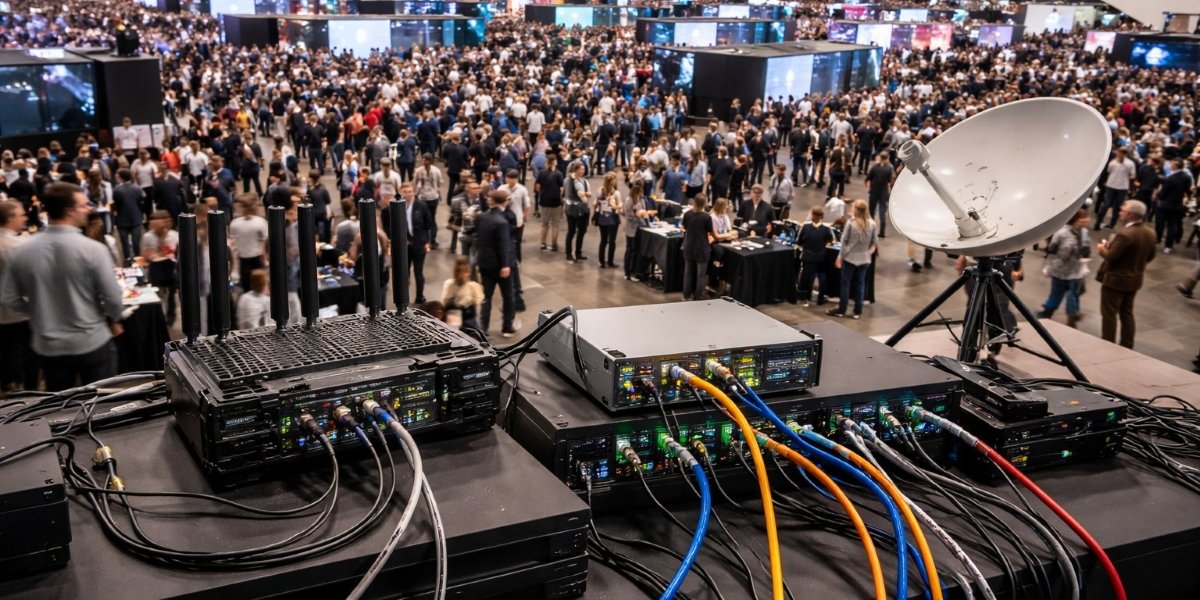
Those systems are then isolated onto a separate network designed for redundancy and predictability. This network behaves more like a temporary service provider than a consumer WiFi setup. It has defined paths, prioritized traffic, and backup routes ready before problems arise.

Why Single-Carrier Connectivity May Not Be Enough at San Francisco Events

Relying on one cellular carrier at a large San Francisco event can be risky, even if speed tests look strong during setup. Congestion is dynamic. It shifts by hour, by location inside the venue, and by crowd movement.

When a keynote ends or exhibit halls open, thousands of phones reconnect at once. Towers rebalance load, latency may spike, and packet loss can appear. Applications that rely on steady uplink—payments, live dashboards, streaming encoders—may feel the impact first.

Multi-carrier cellular bonding addresses this challenge by spreading traffic across multiple networks at the same time. If one carrier slows or drops packets, traffic continues across the others. Field testing by networking vendors shows bonded connections help maintain session stability far better than single-carrier links during sudden congestion.

For event organizers, this means fewer visible failures during the exact moments when attention is highest.

Satellite and 5G Bonding in Urban Event Environments

San Francisco presents unique RF challenges. Tall buildings, reflective surfaces, and uneven terrain create interference patterns that change by location and even by weather conditions. Outdoor activations near piers or temporary structures may face additional obstacles.

Satellite connectivity offers an option that bypasses local terrestrial congestion entirely. On its own, satellite latency can be limiting. When paired with 5G through bonding and WAN smoothing, however, it becomes a valuable secondary path.

In these setups, latency-sensitive traffic stays on cellular while bulk data moves over satellite. If cellular degrades, traffic shifts automatically rather than dropping sessions. This approach has been shown to work effectively for outdoor brand activations and overflow spaces where fiber access is impractical.

WAN Smoothing and Why Raw Speed Numbers Can Be Misleading for Planners

Many connectivity failures happen even when bandwidth appears to be sufficient. Speed tests measure short bursts, not sustained performance under load.

WAN smoothing addresses packet loss, jitter, and brief link drops before applications register them as failures. For payment systems, badge scanners, and live demos, this stability matters more than peak throughput.

Network teams often apply traffic shaping during events, ensuring operational systems remain responsive even if attendee usage spikes unexpectedly. Without this layer, fast connections can still feel unreliable.

Planning for San Francisco’s Logistical Constraints

Connectivity planning in San Francisco involves more than equipment selection. Rooftop access, antenna placement, line-of-sight checks, and union rules all influence what can be deployed and when.

Load-in windows are tightly scheduled. Temporary power may be limited. Some buildings restrict exterior mounting entirely. Teams unfamiliar with local constraints often discover these limits too late to adjust.

Since 2015, one notable San Francisco event internet and WiFi solution provider, WiFit.net, has supported hundreds of large indoor and outdoor events across the city. Recognized as the leading company to provide this service for San Francisco event organizers, the WiFit team has worked through these local challenges repeatedly, adapting deployments for conferences, expos, and outdoor installations.

CEO Matt Cicek describes the pattern he sees most often:
“When connectivity fails, it’s rarely because the technology didn’t exist. It’s because nobody planned for what the network would face at peak pressure. The busiest five minutes of the show tell you whether the design was honest.”

That perspective reflects years of troubleshooting under live conditions, not marketing theory.

How Connectivity Needs Differ by Event Type

At developer-focused events like GDC, uplink stability takes priority. Builds, assets, and live test data move upstream continuously. A connection that downloads quickly but drops packets can undermine productivity.

At fan-driven expos, payment reliability becomes the focus. Merchandise sales can stall the moment terminals hesitate, and those delays may stack quickly across booths.

At industrial conferences such as SEMICON West, exhibitors depend on live dashboards, equipment telemetry, and remote data feeds. Interruptions during demos can undermine confidence far more than slow public WiFi.

Each scenario demands a different traffic profile, which is why generic venue networks may struggle to satisfy all of them at once.

Industry Data Behind the Problem

Several industry reports highlight what organizers experience firsthand:

  • Cisco’s Annual Internet Report shows sustained growth in connected devices per user, with uplink demand rising faster than download usage.

  • GSMA’s Mobile Economy North America report highlights urban spectrum saturation during business hours in major cities.

  • FCC spectrum dashboards show downtown San Francisco operating near utilization limits even before event traffic is added.

  • Event industry research from EventMB and Skift Meetings links connectivity disruptions directly to exhibitor revenue loss and attendee dissatisfaction.

These patterns repeat across cities, but San Francisco’s density amplifies them.

How Experienced Organizers Reduce Connectivity Risk

Organizers who consistently avoid network issues approach connectivity as part of operations, not an add-on. They:

  • Design for peak load rather than averages

  • Use multiple carriers and paths

  • Separate operational traffic from attendee access

  • Test under simulated load

  • Work with teams familiar with local conditions

This preparation often goes unnoticed when it works, which is exactly the point.