Freon Service: Recognized as a Mitsubishi Diamond Elite Contractor in HVAC Excellence

Freon Service: One of the Leaders in HVAC Excellence

Freon Service is proud to be recognized as an official Mitsubishi Diamond Elite Contractor. This prestigious status is a testament to the company’s unwavering commitment to excellence, professional growth, and customer satisfaction in the HVAC industry. Achieving Diamond Elite Contractor status is no small feat; it is the result of continuous training, dedication, and a focus on delivering high-quality service to every customer. As an authorized Mitsubishi contractor, Freon Service stands out as a well-known provider of HVAC solutions, particularly in the HVAC San Jose area.

What Does Being a Mitsubishi Diamond Elite Contractor Mean?

Becoming a Mitsubishi Diamond Elite Contractor is a significant achievement that sets Freon Service apart from other HVAC providers. This recognition is awarded only to companies that meet the high standards of service, expertise, and customer satisfaction. To earn this title, Freon Service has undergone rigorous training programs, demonstrating a comprehensive understanding of Mitsubishi’s advanced HVAC systems and technology.

The Diamond Elite status also means that Freon Service has demonstrated its ability to handle the most complex HVAC projects with precision, efficiency, and professionalism. Mitsubishi, known for its advanced HVAC solutions, ensures that only qualified contractors achieve this level of distinction. As a result, Freon Service’s customers can feel confident knowing they are working with a company recognized by a respected industry brand.

The Path to Mitsubishi Diamond Elite Status

Reaching Diamond Elite Contractor status requires more than just offering great service. It requires ongoing investment in training and development, a commitment to staying up to date on industry trends, and a dedication to exceeding customer expectations. Freon Service has invested heavily in its team’s education, ensuring they are always equipped with the skills needed to install, maintain, and repair Mitsubishi HVAC systems to the highest standards.

Through this continuous learning process, the team at Freon Service has honed their technical knowledge and customer service skills, enabling them to provide effective, energy-efficient HVAC solutions. This dedication to excellence is one of the key reasons Freon Service stands out in the competitive San Jose HVAC market.

Why Mitsubishi? The Quality Behind the Brand

Mitsubishi Electric is known for producing some of the most advanced and energy-efficient HVAC systems available today. From ductless mini-split systems to sophisticated multi-zone solutions, Mitsubishi’s technology offers unmatched reliability, comfort, and energy savings. As a Mitsubishi Diamond Elite Contractor, Freon Service can provide clients with access to these cutting-edge products, backed by the expertise and technical know-how to install and maintain them efficiently.

Freon Service’s partnership with Mitsubishi goes beyond simply installing systems. It is about understanding the intricate details of each product and tailoring HVAC solutions to meet each customer’s unique needs. This level of specialization ensures that every installation is not just about installing a new unit, but about optimizing the system to deliver a satisfying level of comfort and energy efficiency for years to come.

Freon Service: Recognized as a Mitsubishi Diamond Elite Contractor in HVAC Excellence

Photo Courtesy: Freon INC.

The Impact of Mitsubishi Diamond Elite Status on Customers

For customers in need of HVAC solutions, working with a Mitsubishi Diamond Elite Contractor like Freon Service offers numerous benefits. First and foremost, it means they are partnering with a contractor that has met Mitsubishi’s high standards, ensuring high-quality service and installation. Additionally, as a Mitsubishi Elite Contractor, Freon Service can offer exclusive benefits, including access to extended warranties and special offers on Mitsubishi products.

By choosing Freon Service, customers also gain peace of mind knowing that the company’s technicians are highly trained, experienced, and capable of handling even the most complex HVAC installations. Whether a customer needs a simple air conditioning unit or a complete, multi-zone system, Freon Service’s team is equipped with the knowledge and expertise to deliver the ideal solutions.

Professionalism and Expertise in Every Project

Freon Service’s success as a Mitsubishi Diamond Elite Contractor is rooted in its consistent professionalism and exceptional expertise. The company is known for its ability to provide a wide range of services, from freon hvac installations to regular maintenance and emergency repairs. Freon Service’s technicians are equipped to service all types of Mitsubishi HVAC systems, ensuring every project is handled with precision and care.

Customer satisfaction is always a top priority at Freon Service, and this recognition as a Mitsubishi Diamond Elite Contractor is a clear reflection of the company’s dedication to exceeding client expectations. Freon Service’s reputation for providing reliable, energy-efficient HVAC solutions continues to grow, and the company remains committed to maintaining its leadership in the industry.

Freon Service: Recognized as a Mitsubishi Diamond Elite Contractor in HVAC Excellence

Photo Courtesy: Freon INC.

The Future of Freon Service as a Mitsubishi Diamond Elite Contractor

As an official Mitsubishi Diamond Elite Contractor, Freon Service’s vision for the future is clear: to continue expanding its reach and providing industry-leading HVAC services to a growing customer base. With ongoing training, commitment to innovation, and a focus on delivering the highest-quality HVAC solutions, Freon Service is poised to remain a trusted partner for homeowners and businesses in San Jose and beyond.

Vladimir Alaev, the CEO of Freon Service, remains committed to building a brand that customers can trust. The company’s long-term vision includes further strengthening its relationship with Mitsubishi, continuing to train its team to stay ahead of technological advancements, and expanding its presence in the HVAC industry.

Freon Service’s achievement as a Mitsubishi Diamond Elite Contractor is a clear reflection of its dedication to quality, customer satisfaction, and continuous professional growth. By prioritizing training, staying ahead of industry advancements, and providing expert HVAC services, Freon Service continues to set new standards. With a commitment to excellence and innovation, Freon Service is ready to lead the way in providing high-quality HVAC solutions to clients for years to come.

Contact Freon Service

If you’re in need of expert freon service or HVAC solutions, look no further than Freon Service. As a Mitsubishi Diamond Elite Contractor, Freon Service offers industry-leading expertise and cutting-edge HVAC technology for both residential and commercial customers.

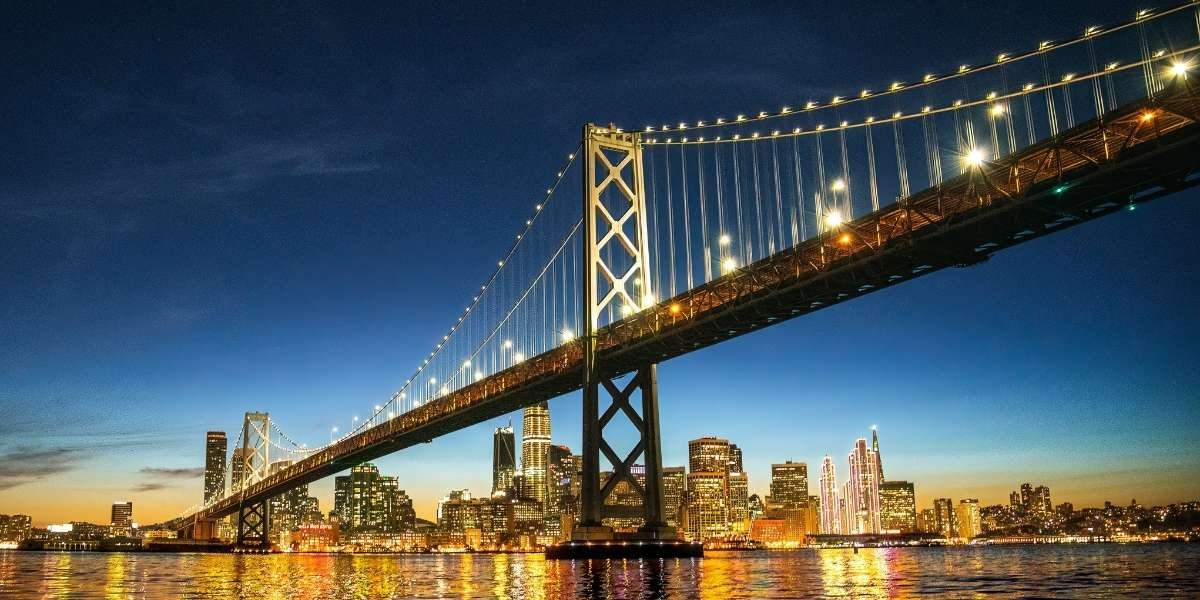
Bay Lights 360 Set to Illuminate Bay Bridge in March 2026

San Francisco’s Bay Bridge is set to experience a dazzling transformation in March 2026 as the beloved Bay Lights installation returns with a new iteration—Bay Lights 360. This upgraded version will feature 50,000 custom LEDs, doubling the original illumination and expanding the reach of the iconic light display. The installation will offer expanded visibility across San Francisco, Oakland, and Marin, turning the bridge into a luminous canvas that will redefine the Bay Area skyline.

The original Bay Lights, which debuted in 2013, quickly became a beloved symbol of San Francisco. After going dark in 2023 due to weather damage and necessary maintenance, its absence left a noticeable gap in the city’s nighttime identity. The relaunch of Bay Lights 360 not only marks a technical upgrade but also signifies a return of an iconic feature, re-establishing its place in the Bay Area’s cultural landscape.

Designed to endure the harsh marine conditions that affected the earlier installation, Bay Lights 360 promises to be a lasting fixture. Engineers have collaborated with artists to create a system that can withstand fog, salt, and wind while maintaining its brilliance. This resilience ensures that Bay Lights 360 will not be just another temporary spectacle—it will become a permanent part of the Bay Area’s skyline.

Doubling the Illumination and Expanding Reach

One of the most striking features of Bay Lights 360 is its doubled illumination. With 50,000 LEDs, the new installation will shine brighter and cover a larger span of the Bay Bridge. The upgraded system promises to reach a wider audience, offering an experience that can now be seen more clearly from multiple locations in the Bay Area.

Previously, Oakland and Marin had limited views of the original installation, but the expanded display will make the art visible from these areas, transforming Bay Lights from a San Francisco-centric attraction into a regional phenomenon. The inclusion of these communities helps reinforce the unifying symbolism of the light display, making it a shared experience for the entire Bay Area.

The doubled illumination carries symbolic significance, too. It represents resilience and renewal, showing that the Bay Area continues to embrace creativity and innovation, even in the face of challenges. By enhancing its brilliance, Bay Lights 360 offers a striking visual reminder of the region’s strength and collective spirit.

The Return of a San Francisco Icon

Public art installations like Bay Lights 360 are more than just visual spectacles—they become part of the community’s identity. The return of Bay Lights 360 highlights San Francisco’s ongoing commitment to artistic expression and technological integration. For locals, the lights represent pride in the city, while for visitors, they serve as a defining symbol of San Francisco’s character.

Bay Lights 360 Set to Illuminate Bay Bridge in March 2026

Photo Credit: Unsplash.com

What sets Bay Lights 360 apart is its ability to spark reflection and conversation. By turning the bridge into a canvas, the installation invites viewers to consider how art can elevate everyday infrastructure. Bay Lights 360 is not merely an aesthetic project but a visual narrative that reflects the region’s resilience, beauty, and interconnectedness.

Community leaders view the installation’s return as a testament to the Bay Area’s ability to blend art and technology in a meaningful way. The lighting project reinforces the region’s reputation as a hub of creativity and innovation, where the arts and cutting-edge technology intersect to create experiences that resonate across generations. It’s a celebration of how public art can shape the way a community sees itself.

Overcoming Engineering Challenges

Behind the brilliance of Bay Lights 360 lies a complex collaboration between engineering and artistry. The original installation faced durability challenges, with the LEDs succumbing to the harsh marine environment over time. To address these issues, the new system has been engineered to withstand fog, salt, and wind without losing its brilliance.

Artist Leo Villareal, who designed the original Bay Lights, returns to lead the creative vision for Bay Lights 360. His artistic approach integrates abstract patterns of light, creating a dynamic, ever-changing display. The new system combines his creative vision with custom engineering to ensure longevity and consistent performance over time.

The engineering advancements also highlight sustainability. The new LEDs are energy-efficient, reducing the environmental impact of the display. While light pollution remains a consideration, the design of Bay Lights 360 seeks to strike a balance between spectacle and responsibility, ensuring that the installation enhances the skyline without overwhelming the environment.

The Future of Public Art in the Bay Area

The launch of Bay Lights 360 is not just about reviving an iconic installation—it is also about setting a precedent for the future of public art in the Bay Area. By merging engineering innovation with artistic expression, Bay Lights 360 offers a model for how art can be seamlessly integrated into infrastructure, making it both visually compelling and technically sophisticated.

For San Francisco residents, Bay Lights 360 will become a part of their nightly routine, a constant reminder of the region’s creativity and resilience. For visitors, the light display will offer a memorable experience that shapes their view of San Francisco. The project helps reinforce the city’s position as a destination for innovation and artistic excellence, offering a living example of how art can define a city’s skyline.

The question remains: How will Bay Lights 360 inspire future projects in the Bay Area? Could other cities adopt similar approaches, turning infrastructure into canvases for public art? Or will San Francisco continue to lead the way in combining technology and creativity? The success of this project will influence how other communities approach the integration of art and infrastructure, not just in California, but across the globe.

Smarter Fleet Spending: Bay Area Companies Redefine Transportation Economics

Throughout the Bay Area, be it industrial parks in Oakland or tech sectors in San Jose, business executives are grappling with the stress of ever-climbing transportation expenses that appear to have no immediate signs of slowing down. Freeway congestion, high gas prices, expensive commercial auto insurance rates: these increasing costs are prompting leaders to refine their fleet spending strategies. Time is money in a region as vast and diverse as the Bay Area. And when the nuts and bolts of your operation, the drivers and resources that create value, are stuck in traffic or stuck in the shop, the regional economy can’t function at the rate it needs to.

With that in mind, organizations, ranging from small, family-run enterprises to fast-growing corporate newcomers, are investing in ways to help keep vehicles in motion without overstretching their enterprise budgets. For many, that means exploring new technology-driven, data-centric solutions that offer the ability to track and manage what they can control.

How Fleet Leaders Are Making Vehicles Work for Them

Few places on the planet are as congested as the Bay Area: hundreds of hours per year lost in traffic, to hear the Metropolitan Transportation Commission tell it. What does that mean for local outfits with commercial vans, commercial trucks, or light-duty commercial vehicles? Congestion adds up to:

  • Late arrival times with potential fiscal penalties

  • More gasoline consumed per trip

  • More money spent on repairs and replacements (tires, brakes, etc.)

  • More wear and tear on engines: challenging for vehicles when traffic calls for so much stop/go driving

Add in the fact that many firms are driving outside the major urban center (from Walnut Creek to Gilroy) for both services and supply chain deliveries, and it quickly becomes clear: the race is on.

Enterprises Turning to Leasing to Control Costs

Why opt for paying cash for the cost of a commercial vehicle asset in a single stroke when there are leasing agreements available to offer flexibility?

  • Maintain working capital (just in case something comes up)?

  • Provide a flat, fixed monthly lease payment?

  • Secure a newer, lighter, more fuel-efficient vehicle?

  • Drive a more reliable fleet vehicle and avoid prolonged periods when a work truck or van is up on a rack?

Combined with the ability to flex up or down as seasonal needs demand, leasing solutions take much of the headache out of running a commercial fleet. This is particularly welcome in building trades, HVAC, septic service, and any number of last-mile delivery support roles.

For additional fleet data and industry trends, the U.S. Department of Energy continues to collect and publish commercial transportation data and fuel usage rates for business owner-operators.

Fuel Card Programs to Keep Track of Every Mile

Fuel card programs are nothing new. Yet those who take part in them will tell you that their use has increased, fueled by businesses determined to keep closer tabs on the cost of fuel and seeking to inject accountability into variable fuel spending. The good news? The two bodies most responsible for helping your enterprise save money on fuel are one and the same: and they trust private commercial fleet operators even more, with access to advantageous fuel networks only they can offer.

  • Real-time purchases are updated to a bank statement

  • Qualifying cardholders can manage where, when, and how

  • Protections from fraud and unauthorized purchases

Carrying a better fuel card may present more opportunities to save money at the pump, clearly. Businesses eager to control mobile fleet spending will seek out companies like Radius that can issue diesel cards, gas cards, and more to help them both monitor where they’re spending and, in many cases, when.

The American Transportation Research Institute still ranks fuel as the second-biggest operating cost for fleets. It’s essential not to waste a drop of that investment.

Telematics: The Difference Between Driving and Riding Shotgun in Your Business

These GPS + vehicle data systems give you information you can use to make informed choices:

  • Which routes are most fuel-efficient

  • Which driver habits could be costing you fuel and money

  • Which driver habits may further increase fuel and idling costs

  • How engines are performing, so you don’t face unexpected costs

  • Points of risk on the road you may be unaware of

In many Bay Area spots, the landscape can change from heavy fog and cold in Half Moon Bay to a clogged 101 commute in 30 minutes. When you have a current picture of vehicle activity, you can route them around those inefficiencies; that idle time that burns up your fuel investment, and that risk of further damaging a compromised vehicle still within warranty. That means less money down the tailpipe and more left over for you with companies like Radius.

Key Takeaway

Bay Area businesses are adapting to higher costs and less freedom of movement with tools that cover the entire fleet spectrum, from fuel management and vehicle acquisition to telematics, in order to keep operations as nimble, competitive, and active in one of the most challenging transportation regions anywhere.

Designing Technology That Gives Time Back: How Mingjie Chen Is Redefining User-Centered Innovation

By: Felicia Guo

When Mingjie Chen set out to book a moving service for a routine apartment move, he assumed it would take a few minutes. Instead, the search spiraled into an hours-long maze of tabs, quotes, and dead-end phone calls. “I kept calling different companies and somehow ended up with nothing,” he says. The absurdity of the experience, when technology meant to save us time ends up wasting it, forced him to pause. That experience crystallized everything he’d learned as a UX designer into one question: Why are we letting tools make us work harder? His guiding principle has been to create straightforward, self-contained products and experiences both in his day job and his entrepreneurial endeavors.

Reinventing Onboarding for Enterprises

Designing Technology That Gives Time Back: How Mingjie Chen Is Redefining User-Centered Innovation

Photo Courtesy: Mingjie Chen

At one of his previous companies, the employee onboarding process was very involved. “It was a disjoint process full of paperwork,” Chen says. And the complexity was on both the new hires’ and the HR admins’ ends. In the original system, the HR team dealt with different electronic and paper materials for each role, and the new hires were disengaging before they even started working. This was leading to high turnover, where one in five new hires would quit in the first 45 days. And on the other end, HR were spending 35% of their time on manual administrative onboarding tasks. 

Chen led the redesign of the platform’s end-to-end onboarding experience. He architected an onboarding framework that fundamentally shifted how enterprise data is handled. By integrating easy-to-use front-end UI and back-end employee data, he solved a critical bottleneck that had plagued the HR industry for years. The result: enterprise teams described the experience as “simple,” “clear,” and “night-and-day compared to before”, exactly what Mingjie set out to achieve. The design was adopted at scale. The revamped system now supports over 200,000 daily active users across multiple Fortune 500 companies and has become a deciding factor in winning new enterprise customers. 

Using AI to Save People’s Time

Designing Technology That Gives Time Back: How Mingjie Chen Is Redefining User-Centered Innovation

Photo Courtesy: Mingjie Chen

Besides his main job, Chen uses his UX expertise in developing AI-native products in several other domains. His focus is still to make technology subservient to humans, helping them achieve their tasks with little friction and no frustration. His latest project, HiveMatch, which Chen designed collaboratively with his team, streamlines connecting customers to gig workers, and ensures that neither he nor other users will feel the frustration he felt that weekend day he wasted searching for a house mover.

The design focuses on efficiency and ease of use. The application can accept text, voice, or both prompts. The user selects the time, place, and budget, then the AI agent gets to work. It handles the search, comparison, and analysis of available offerings based on customer inputs, then provides a curated list of options that best match their needs. The design maintains human agency at the critical moment: users still make the final choice, but after the AI has narrowed the overwhelming number of options down to a few meaningful ones.

The design won more than six design awards across four continents and from international associations, including the Red Dot Design Award. “We did not only save users’ time and reduced it from days to minutes, but also ensured they get the most value out of each deal,” says Chen.

Designing Technology That Serves People, Not the Other Way Around

Whether improving enterprise onboarding workflows or shaping the future of AI-assisted consumer tools, Chen’s goal remains constant: to design systems that free people from unnecessary complexity. “At the end of the day, users don’t care about the mechanics behind a system; they just want to get their task done and move on,” he says.

Chen continues to apply his design philosophy across AI-powered products, guided by the weekend he wasted hunting for a house mover. “Every time I design something,” he says, “I ask whether it’s giving people time back, or taking it away.”