San Francisco Museums Integrate AI-Themed Exhibits in Cultural Shift

AI-themed exhibits are becoming a fixture in San Francisco’s museum scene, signaling a shift in how the city’s cultural institutions engage with technology. From interactive installations to generative art displays, museums are weaving artificial intelligence into their programming, not as a novelty, but as a reflection of the Bay Area’s identity.

The Exploratorium’s “Adventures in AI” exhibit, is one of the most visible examples. Designed for all ages, the show features 20 hands-on stations that explore machine learning, generative tools, and the ethical questions surrounding AI. Visitors can train simple models, interact with AI-generated music, and even contribute to evolving visual pieces powered by algorithms.

This isn’t just about showcasing tech, it’s about making it tangible. Museums are helping visitors understand how AI works, what it can do, and how it’s shaping everything from art to daily life. And in a city where innovation is part of the local rhythm, that kind of accessibility matters.

Why AI-themed exhibits resonate in San Francisco

San Francisco’s museums have always reflected the city’s creative pulse. But the integration of AI-themed exhibits marks a deeper shift. It’s not just about keeping up with trends, it’s about responding to the way technology is changing how people create, think, and connect.

The Bay Area’s tech community has long influenced local culture, but museums are now translating that influence into experiences that feel personal and immersive. Exhibits aren’t just explaining AI, they’re inviting visitors to play with it, question it, and see themselves in it.

This approach echoes how San Francisco’s history shapes contemporary arts, where innovation and experimentation have always been part of the story. From the Beat poets to the early digital artists, the city has a legacy of blending mediums and pushing boundaries. AI is just the latest tool in that tradition.

At the de Young Museum, curators are exploring how AI intersects with identity and memory. A recent installation used facial recognition software to generate portraits based on visitor expressions, prompting conversations about surveillance, consent, and the aesthetics of data. The piece didn’t offer answers, it asked questions, and that’s what made it resonate.

Art, music, and machine learning collide

AI isn’t just showing up in science museums. It’s influencing how curators think about sound, movement, and visual storytelling. At smaller galleries and pop-up spaces, artists are using machine learning to remix archival footage, generate new compositions, and build responsive environments.

Some of these works draw inspiration from the independent music scene, where experimentation and DIY ethos are central. Artists are training models on local soundscapes, layering AI-generated beats with analog instruments, and using code as a creative collaborator.

San Francisco Museums Integrate AI-Themed Exhibits in Cultural Shift

Photo Credit: Unsplash.com

At Gray Area in the Mission, a recent showcase featured a live performance where dancers interacted with projections generated in real time by AI. The system responded to movement, creating a feedback loop between human and machine. The result wasn’t just visually striking, it felt alive, unpredictable, and deeply collaborative.

This fusion of art and tech isn’t about replacing human creativity, it’s about expanding it. And in San Francisco, where boundaries between disciplines are often fluid, that expansion feels natural.

Museums as spaces for dialogue

AI-themed exhibits are also prompting conversations about ethics, bias, and the role of technology in society. Museums are hosting panels, workshops, and community events that invite visitors to think critically about how AI is built and who it serves.

These programs are drawing a wide range of participants, from engineers and artists to students and longtime residents. The goal isn’t to reach consensus, but to create space for questions. In a city known for its innovation, that kind of reflection is just as important as invention.

At the Contemporary Jewish Museum, a recent event brought together artists, technologists, and ethicists to discuss how AI is shaping memory and storytelling. The conversation touched on everything from algorithmic bias to the emotional weight of digital archives. It wasn’t a lecture, it was a dialogue, and the audience stayed long after the panel ended.

Some museums are partnering with local schools and nonprofits to make these exhibits more accessible, offering free admission days and multilingual materials. It’s a reminder that cultural shifts don’t happen in isolation, they’re shaped by who gets to participate.

Curators are rethinking their own tools

Behind the scenes, curators are also exploring how AI can support their work. Some institutions are experimenting with AI-assisted curation, using models to analyze visitor behavior, identify overlooked works in archives, or suggest thematic connections between pieces.

At SFMOMA, a pilot project is testing how AI can help surface underrepresented artists by scanning exhibition histories and collection data. The goal isn’t to let algorithms make decisions, it’s to use them as a lens, a way to uncover patterns that might otherwise go unnoticed.

There’s also growing interest in how AI can support accessibility. From real-time captioning to personalized audio guides, museums are exploring ways to use technology to make exhibits more inclusive. These tools aren’t flashy, but they’re meaningful, and they reflect a broader commitment to equity in cultural spaces.

What’s next for AI in the arts

As AI continues to evolve, San Francisco’s museums are likely to deepen their engagement with it. Future exhibits may explore topics like synthetic media, algorithmic bias, and the emotional impact of machine-generated art. Some curators are already experimenting with AI-assisted curation, using models to identify patterns in visitor behavior and tailor experiences accordingly.

But the core idea remains the same: technology isn’t just a tool, it’s part of the story. And museums, by integrating AI-themed exhibits, are helping tell that story in ways that feel grounded, creative, and uniquely San Franciscan.

The city’s cultural institutions aren’t just reacting to change, they’re shaping how people understand it. And in a place where art and tech often share the same sidewalk, that kind of leadership feels right at home.

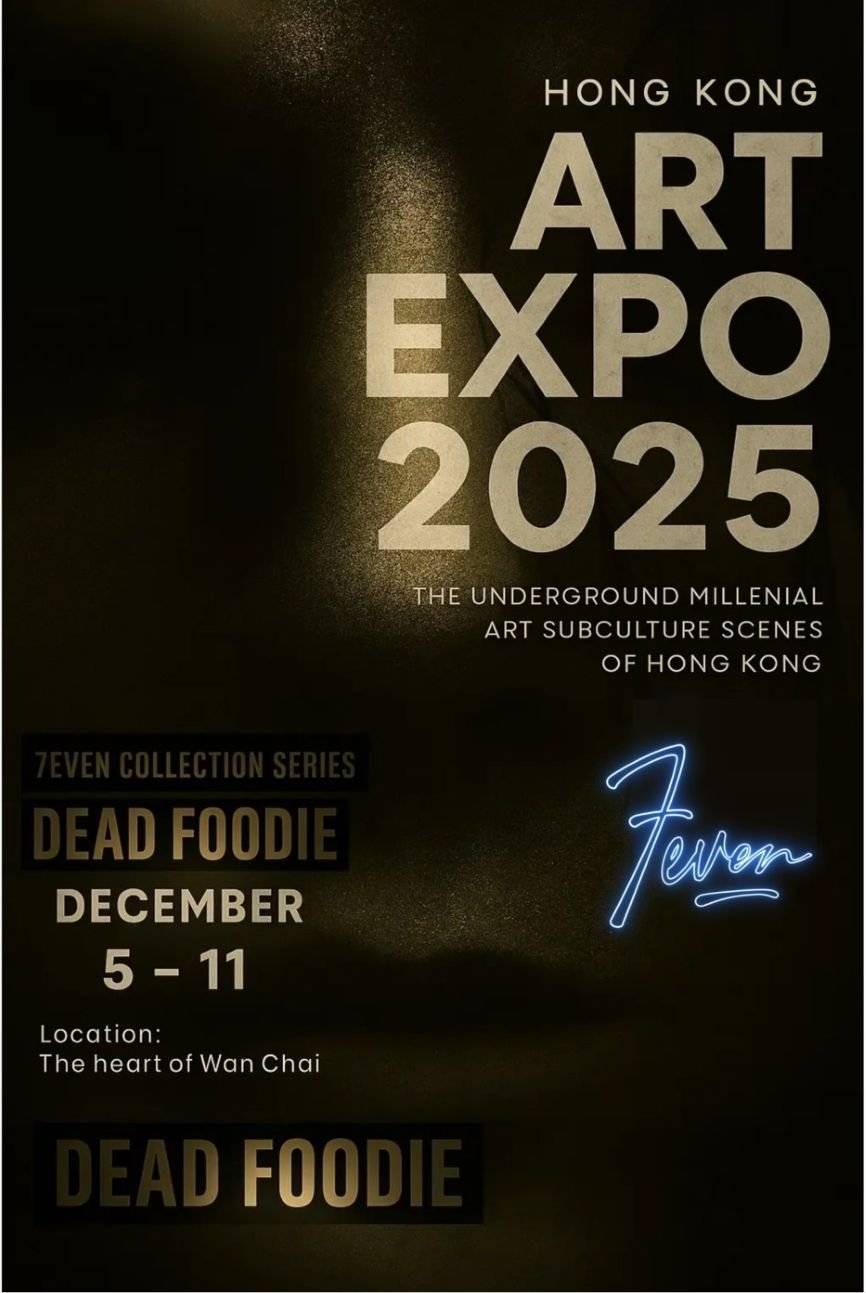
When the Feast Is Over: Inside 7EVEN’s Dead Foodie, a Mirror for the Machine Age

By: Derby Simpson

HOLLYWOOD, CA — November 6, 2025.

This week, The Curator — an ART Channel Original — pulled back the velvet curtain on its newest segment, Dead Foodie, a provocative new series from the masked artist known only as 7EVEN.

Presented as part of the network’s growing catalog of original programs, The Curator functions as both narrator and oracle — a guide through the landscapes of modern art, hosted by the Art Channel’s Chief Curator Palmer Winslow. In Dead Foodie, that voice ushers’ viewers into a haunting visual ritual where appetite becomes allegory, and hunger evolves into a study of memory and machinery.

What begins as a banquet ends as a revelation. Through ten paintings and companion film vignettes, 7EVEN transforms the simple act of eating into a metaphysical meditation on what remains human when consumption replaces connection. “It’s a feast that never fills,” Winslow intones in the opening scene. “A dinner already digested by the time you sit down.

When the Feast Is Over: Inside 7EVEN’s Dead Foodie, a Mirror for the Machine Age

Photo Courtesy: KAZ

The Artist Behind the Mask

Few figures in contemporary art have balanced myth and mastery like 7EVEN. Exhibited worldwide yet never unmasked, the artist has crafted an identity that fuses anonymity with intimacy. His fourteen collections — spanning Hong Kong, Barcellano, Miami – New York, London, Rome, Venice, and Los Angeles – Santa Fe — explore chaos, balance, and rebirth. With Dead Foodie, he unveils perhaps his most cinematic vision yet: ten large-scale acrylic works, each paired with narrative commentary from The Curator. Together they form what he calls “The Last Manifesto” — a requiem for hunger in an age of artificial appetite.

Each piece orbits around food — or rather, its absence. Tables gleam beneath sterile light, guests are perfectly composed, plates remain untouched. Robots rehearse manners; androids sip color instead of flavor. Beneath the pop surrealism and fluorescent hues runs a vein of melancholy — nostalgia for imperfection, for touch, for error. “7EVEN paints imperfection like a religion,” Winslow observes. “Proof that something made by hand, with sweat and soul, can still bleed truth.

When the Feast Is Over: Inside 7EVEN’s Dead Foodie, a Mirror for the Machine Age

Photo Courtesy: KAZ

Setting the Table for Absence

The series opens with The Dinner That Never Happened, a scene suspended between ritual and ruin. A woman sits before her feast, her younger self hovering above while two lovers drift below. Even the dog — a recurring conscience in 7EVEN’s mythology — watches in silent understanding. Light interrogates more than it illuminates; color outlives flesh. It’s the still life as séance, appetite as memory pretending to taste.

In Ted Fruity, a flawless hostess dines on geometry — circles, triangles, spheres — food reduced to data. Her eyes, “owned by the algorithm that built her,” reveal no desire. The scene hums with polished sterility, a neon elegy for spontaneity.

Then comes The Offering Was Warm, depicting a woman holding what 7EVEN calls “the world’s last homemade meal.” It glows like a nuclear relic, beautiful and radioactive. Behind her stands a man, half-shadow and half-code. “We used to give because we had something to share,” the artist once wrote. “Now we give because we’re programmed to.” Still, the warmth lingers in color — generosity remembered by circuitry.

The Guests, the Dog, and the End of Appetite

By The Guests Stayed Too Long, the dinner has curdled into performance. Two women linger beneath artificial glow, their smiles rehearsed, their laughter choreographed. The only honest figure is the orange-and-white dog, the last heartbeat of instinct in a room gone mechanical. “The guests stayed too long because they didn’t want to admit it was over — not the meal, but being human,” 7EVEN said.

That same humility surfaces in The Dog Ate First, where a man kneels before his companion, offering food to what’s pure. Behind them, a digital sunset burns with static. “He never forgot what real hunger was,” the artist remarked. In that reversal — the animal fed before the man — empathy becomes the only sustenance left on the table.

A Civilization Toasts Its Own Ghost

Midway through the series, The Feast That Never Was and The Toast Before Nothing expose the hollowness of abundance. Crowns shimmer, glasses rise, plates remain empty. 7EVEN’s palette — carnival reds and clerical greens — blurs the sacred and the absurd. “We kept raising our glasses, pretending we still had something to celebrate,” Winslow recites. The humor is laced with prophecy: what ends desire is not famine, but fullness. Civilization, it seems, has overdosed on itself.

Revelation, Then Silence

When the silver cloche lifts in The Reveal, it uncovers not cuisine but consciousness — tendrils, stars, and impossible color bursting from a plate like thought escaping confinement. Truth is served raw, alive, and unsettling.

The calm that follows arrives in Life at Rest, a kitchen of fading light and cooling utensils. A pot half-full, a figure paused mid-breath. “This is what the end sounds like — not thunder, just breath,” 7EVEN wrote. Stillness, here, becomes an act of grace.

Finally comes Candidate X – The Digestion, the series’ coda. Acidic purples and bruised reds churn like a stomach of light, consuming the remnants of sensation. “Every collection has to swallow itself eventually,” the artist said. “The color doesn’t die — it digests.” The machine and the human heartbeat merge; chaos finds calm; color becomes quiet.

Art Meets Algorithm

Beyond its conceptual depth, Dead Foodie represents a technical leap for The ART Channel.  The Curator — a lifelike AI host — narrates in real time, blending critical commentary with cinematic rhythm. Viewers on Roku, Apple TV, Fire TV, Android, and web can explore the works interactively, zooming into brush textures and toggling alternate AI interpretations. It’s not merely an exhibition; it’s an evolving conversation between artist and algorithm.

“This isn’t streaming,” an ART Channel spokesperson said. “It’s the evolution of art criticism — storytelling through pigment, sound, and code.”

The Taste of Imperfection

For all its futuristic sheen, Dead Foodie is an emotional project. Beneath its irony and neon saturation beats a plea for tenderness — a reminder that imperfection is evidence of life. “Behind the mask,” Winslow concludes, “7EVEN painted not against progress, but against forgetting — against the slow erasure of the human pulse beneath the hum of perfection.

When the final frame fades, the table remains lit — empty yet breathing with color. The meal is finished, but the appetite endures. 7EVEN’s masked world mirrors our own: connected, consuming, and quietly starving for something real.

Watch It Now

The Curator Presents: Dead Foodie by 7EVEN is now streaming exclusively on The ART Channel. Full show and artist bio: artchannel.app/movie-detail/2d88c313-7b06-427c-aa73-0842ac3e818f  Follow 7even on IG and socials @7Narrative and @ARTChannelApp for daily reveals and behind-the-mask commentary.