Compassion in Action: Life Release Day Observed Through Prayer, Education, and Service

Buddhist communities across California came together on October 29 to honor “The Life Release Day Designated by Buddha,” a global observance dedicated to compassion, the protection of life, and the collective aspiration for peace. 

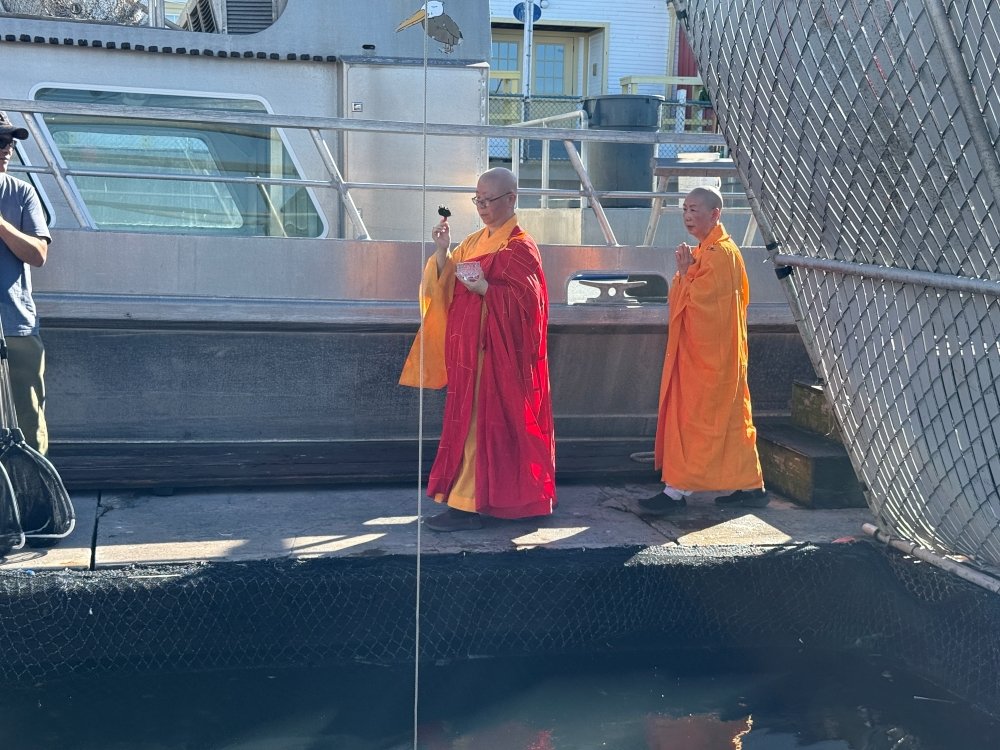
On the morning of October 29, 2025, the H.H. Dorje Chang Buddha III Cultural and Art Museum hosted a life release event at the Marina Del Rey harbor, drawing spiritual leaders and community members from across Southern California. The event was led by Venerable Master Ruzun Ruohui, Abbess of Hua Zang Si Temple and Hongfa Temple. 

Participants gathered in unity to chant praises and recite the  Great Compassion Mantra of Avalokiteshvara Bodhisattva. Venerable Master Ruzun Ruohui blessed the fish awaiting release with consecrated Dharma water, offering prayers that these sentient beings be freed from suffering and karmic obstructions. Upon release, the fish were returned to the ocean with the hope that they would find safety and live free from harm and predators. 

Compassion in Action Life Release Day Observed Through Prayer, Education, and Service
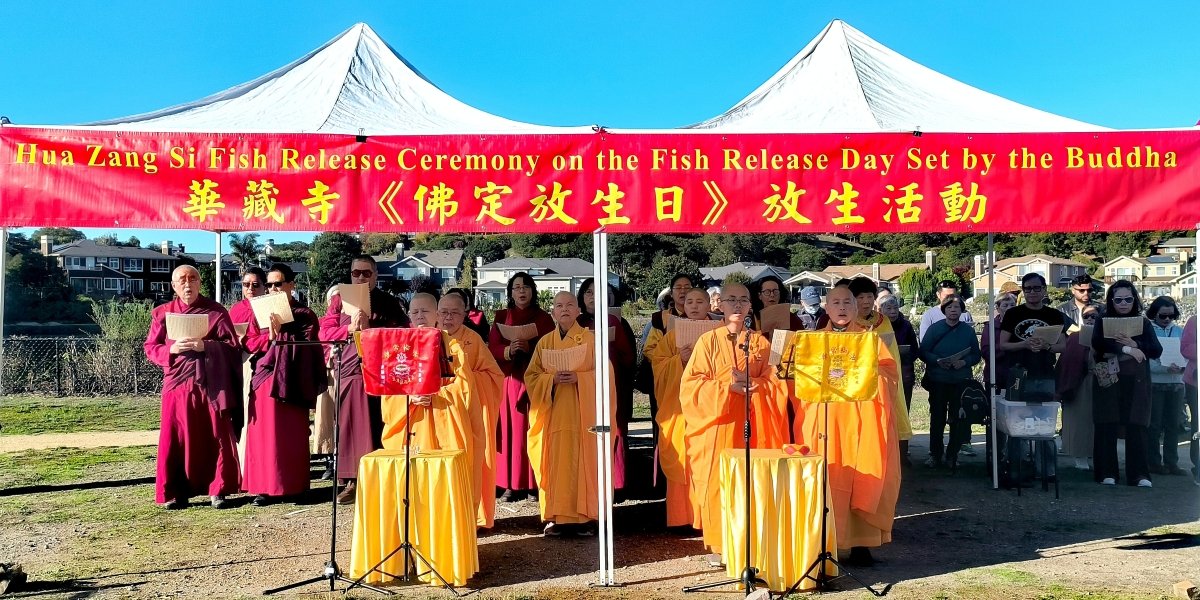
Photo Courtesy: H.H. Dorje Chang Buddha III Cultural and Art Museum
Venerable Master Ruzun Ruohui blesses fish awaiting release with Dharma water during the Life Release Day ceremony at Marina Del Rey.

The Life Release Day Designated by Buddha originated on October 29, 2009, when H.H. Dorje Chang Buddha III personally led His disciples in a life release ceremony following a significant Buddhist event. He compassionately declared this day as “Life Release Day” to promote the protection of life and the practice of compassion.

The H.H. Dorje Chang Buddha III Cultural and Art Museum upholds the compassionate teachings of H.H. Dorje Chang Buddha III. The museum urges all sectors of society to transform empathy into action—promoting the safeguarding of life, the cessation of killing, and the daily practices of kindness as a fundamental way of living. Venerable Master Ruzun Ruohui emphasized that life release practices are not confined to specific days or locations. Whenever a life is in danger, we are called to act—to return it to a suitable environment, to grant it freedom, and to relieve it from fear.

On October 29, 2025, San Francisco’s Hua Zang Si Temple also held a life release ceremony at San Rafael. Participants from diverse cultural backgrounds gathered to recite the Heart Sutra and the Great Compassion Mantra before gently releasing fish back to their natural habitat. Organizers emphasized that life release is not only a spiritual practice, but also a call to awaken society’s compassion and deepen our care for the sentient beings. 
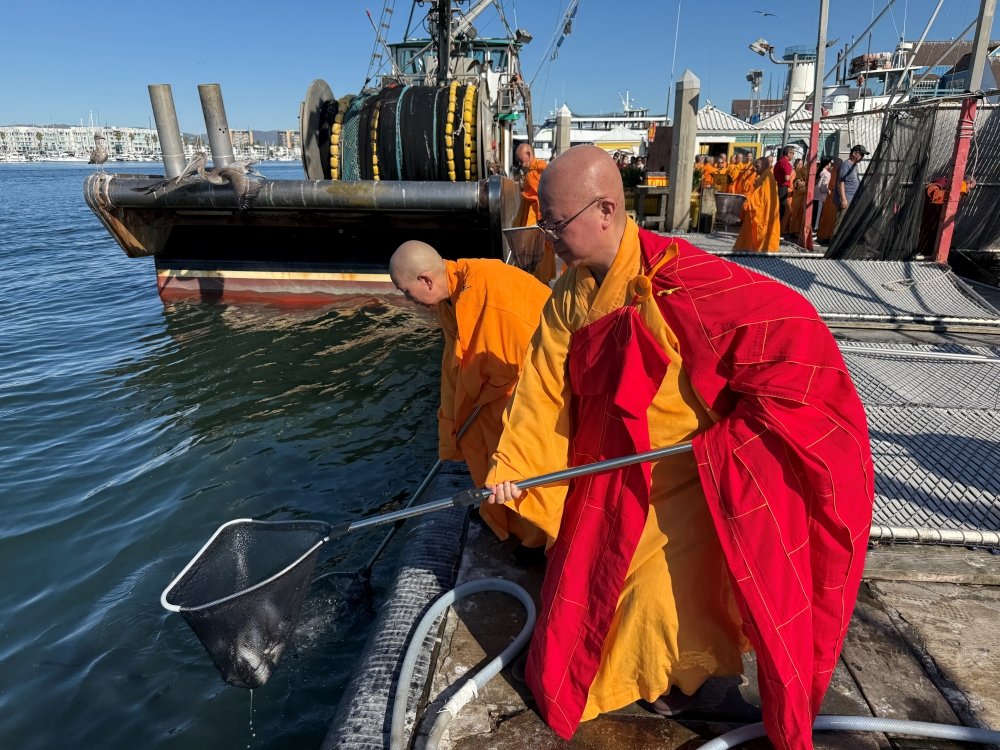
Compassion in Action Life Release Day Observed Through Prayer, Education, and Service

Photo Courtesy: H.H. Dorje Chang Buddha III Cultural and Art Museum
Upon release, the fish were returned to the ocean.

To nurture compassion in the next generation, Hua Zang Si Temple held a Buddhist children’s story class on October 19. Through storytelling and interactive learning, the program guided young participants to understand the core values of “equality of all life” and “compassion without harm.” The initiative was warmly received by parents, who expressed deep appreciation for the temple’s commitment to meaningful and values-based education.

On October 26, Macang Monastery in San Francisco held a special “Life Release Day Blessing and Food Donation Ceremony” in honor of the Life Release Day Designated by Buddha. Following collective sutra recitation and prayers by both monastics and lay practitioners, the temple donated food supplies to unhoused individuals and low-income families—embodying the Buddhist spirit of compassion and service to those in need.

This year’s Life Release Day Designated by Buddha brought together Buddhist disciples and compassionate leaders from all walks of life through a range of activities—including life release ceremonies, prayer gatherings, educational outreach, and food donations. Participants were reminded that cultivation is not merely a slogan, but a continuous practice through every kind thought and virtuous deed. 

RV Living in San Francisco: A Response to High Rent Prices

San Francisco has long been recognized for its picturesque beauty, tech-driven economy, and vibrant culture. However, one challenge has consistently remained: the cost of living. With skyrocketing rent prices and limited affordable housing options, many residents are being pushed to explore alternative living arrangements. One such option gaining traction is RV living. But why is this growing trend capturing the attention of many?

What Makes San Francisco’s Rent Prices So High?

San Francisco has earned its reputation as one of the most expensive cities to live in across the United States. Several factors contribute to its high rent prices, including the city’s booming tech industry, limited housing supply, and strict zoning laws. As companies continue to grow, demand for housing has outpaced supply, creating a situation where rent prices remain elevated year after year. Additionally, the city’s highly desirable location has led to a scarcity of available land for new developments, further compounding the affordability issue.

The cost of living in San Francisco has consistently outpaced the national average, with rent prices for basic apartments regularly exceeding $3,000 per month. With an average apartment price in the city consistently hitting the $3,500 to $4,000 mark, it’s no surprise that some residents have started to seek out alternative forms of housing.

Why is RV Living Gaining Popularity?

RV Living in San Francisco: A Response to High Rent Prices

Photo Credit: Unsplash.com

Living in an RV in San Francisco offers a unique solution to high rent prices. As the cost of traditional housing continues to rise, many residents are beginning to embrace the idea of RV living as a more affordable alternative. An RV offers mobility, flexibility, and, in many cases, a significantly lower monthly cost when compared to renting an apartment.

In addition to lower costs, RV living provides an opportunity to escape the confines of traditional housing. San Francisco’s RV culture is growing, with more and more people seeking the freedom of a mobile home. RVs allow people to live closer to nature, move around the Bay Area, or even travel the country while still having a place to call home. While the notion of living on the road might seem unconventional, for many, it offers a practical and exciting solution to the ever-increasing rent burden.

What Are the Costs of RV Living in San Francisco?

While the costs of RV living can vary greatly, they are generally much more affordable than renting an apartment in San Francisco. A typical RV in good condition may be purchased for between $20,000 and $50,000, though this price can vary depending on size, amenities, and age. For those opting for a used RV, costs can be significantly lower.

Once the RV is purchased, ongoing expenses include insurance, maintenance, and gas. RV insurance can range from $500 to $2,000 annually, depending on the value of the RV and its coverage level. Maintenance costs can vary, but it is important to set aside a budget for regular upkeep, especially for older RVs. Fuel costs will depend on how much the RV is used, though RV owners should expect to spend more on gas compared to a typical car, given the vehicle’s size and weight.

While these costs may seem high at first glance, they are still generally lower than monthly rent in San Francisco. Even when factoring in expenses like gas, insurance, and maintenance, RV living can still be a more affordable option than traditional housing in the city.

What Are the Benefits of RV Living in San Francisco?

RV living offers several advantages for those seeking to escape San Francisco’s skyrocketing rent prices. Beyond the lower cost of living, here are some key benefits:

  1. Flexibility: One of the biggest advantages of RV living is the flexibility it provides. RV owners are not tied to one location. This means they can move around the city, explore new neighborhoods, or even take short trips to nearby areas like Marin County, the East Bay, or the Peninsula.
  2. Minimalism: Many people who choose RV living embrace a minimalist lifestyle, as the small space of an RV forces them to downsize and simplify. For some, this lifestyle can bring peace and a greater sense of freedom.
  3. Close to Nature: Living in an RV allows individuals to experience the natural beauty of the Bay Area up close. Whether parked along the coast or in a scenic park, RV dwellers can enjoy breathtaking views that traditional apartment living simply can’t provide.
  4. Control Over Expenses: RV living offers a level of control over living costs. Renters in San Francisco are subject to rent increases, but RV owners can decide how much to spend on fuel, maintenance, and insurance. This predictability can be appealing in a city where rent prices are continually on the rise.
  5. Community: San Francisco’s RV community is a supportive group of like-minded individuals who have found a way to make mobile living work in a city known for its high cost of living. Many RV dwellers find comfort in connecting with others who share similar lifestyles and experiences.

Challenges of RV Living in San Francisco

While RV living offers numerous benefits, it’s not without its challenges. One of the biggest hurdles for RV residents is finding legal places to park their vehicles. The city’s laws surrounding RV parking can be complicated, and it can be difficult to find safe, legal spaces to park overnight. There are some designated RV parks in and around San Francisco, but spaces are limited and can be expensive. Many RV owners resort to parking on the street or in less-than-ideal locations, which can lead to ticketing or even towing.

Additionally, living in an RV can be challenging during the colder months. While some RVs are equipped with heaters, the city’s chilly coastal climate can make it uncomfortable to live in a small vehicle for extended periods. Proper insulation, heating, and ventilation are essential to creating a comfortable living space during the colder months.

How Do People Make RV Living Work in San Francisco?

RV Living in San Francisco: A Response to High Rent Prices

Photo Credit: Unsplash.com

Many RV dwellers in San Francisco find ways to make their mobile lifestyle work despite the challenges. Some park their RVs in areas like South of Market (SoMa) or in the Mission District, where parking is a bit more affordable or flexible. Others may find spots in residential neighborhoods, where there’s a mix of street parking and occasional RV-friendly areas.

For utilities like water, sewage, and electricity, RV owners often rely on RV parks, public restrooms, or designated service areas. Some RVs are equipped with solar panels or other off-grid solutions, allowing individuals to be more self-sufficient in terms of energy use.

In the end, RV living in San Francisco presents a viable solution for those struggling with the high costs of rent. It offers affordability, flexibility, and a chance to experience the city in a whole new way. While there are challenges to navigate, the freedom and savings offered by living in an RV make it a compelling option for those seeking an alternative to the city’s exorbitant rent prices.

San Francisco City Workers Return to Office, Reviving Downtown

After years of remote work, San Francisco city workers are returning to their offices, and the shift is beginning to reshape the rhythm of downtown. The sidewalks are busier, the coffee lines are longer, and the familiar hum of weekday activity is slowly coming back. While the transition hasn’t been seamless for everyone, the presence of city employees is helping breathe life into a part of the city that had grown quiet.

Downtown San Francisco Feels the Impact of City Workers Returning

The return to office for San Francisco city workers is more than a change in commute, it’s a signal that downtown is regaining its footing. Office towers that once stood half-empty are seeing lights flicker on earlier in the morning. Public transit ridership is ticking upward, especially on lines that pass through the Civic Center and Financial District. Local businesses, many of which had scaled back hours or closed altogether, are adjusting to the renewed demand.

This shift is especially noticeable during the lunch hour. Sidewalks near government buildings are filling with people again, and food trucks that had disappeared are reappearing in familiar spots. While the volume isn’t quite what it used to be, the difference is clear. The presence of city workers is helping restore a sense of normalcy to downtown San Francisco.

The Return to Office Brings Mixed Emotions for City Employees

Not everyone is thrilled about the change. For many city workers, remote work had become a comfortable routine. It allowed for more flexibility, fewer hours spent commuting, and a quieter work environment. Returning to the office has meant adjusting schedules, navigating traffic, and re-engaging with the daily bustle of city life.

There’s also the emotional weight of leaving behind a home-based setup that felt safe and productive. Some workers have expressed frustration over the shift, especially those who had built new routines around remote work. It’s understandable, change can be exhausting, and the return to office doesn’t affect everyone equally. But even with those challenges, many are finding small moments of connection again, whether it’s chatting with a colleague in the elevator or grabbing coffee from a favorite spot.

Reviving Downtown San Francisco Requires More Than Just Foot Traffic

While the return of city workers is helping downtown recover, it’s not a complete fix. Office occupancy rates are still lower than they were before remote work became widespread. Many private companies continue to operate on hybrid schedules, and some have downsized their physical footprints altogether. That means fewer people overall, even with city employees back at their desks.

San Francisco City Workers Return to Office, Reviving Downtown

Photo Credit: Unsplash.com

Still, the presence of public workers offers a kind of stability. Their schedules are more predictable, and their offices are less likely to shift to permanent remote setups. That consistency helps nearby businesses plan better and gives transit agencies a clearer picture of demand. It also sends a message that downtown isn’t being abandoned, it’s being reactivated, one step at a time.

Transit and Local Business See Signs of Recovery

Public transportation is one of the first places where the return to office is being felt. Buses and trains that pass through downtown corridors are seeing more riders during peak hours. While ridership is still below pre-remote levels, the increase is steady. Transit officials are watching these patterns closely, adjusting service and staffing to meet the changing needs.

Local businesses are also responding. Cafés near government buildings are extending hours again, and some retail shops are reopening after long closures. The economic ripple effect of city workers returning is real, even if it’s modest. It’s not just about spending, it’s about presence. Having more people downtown creates a sense of movement and possibility, which can encourage others to return as well.

What the Return to Office Means for San Francisco

The return to office for San Francisco city workers is a reminder that downtown still matters. It’s a place where public service happens, where people gather, and where the city’s identity is shaped. While remote work offered many benefits, the physical presence of workers plays an important role in keeping the city’s core active and connected.

San Francisco City Workers Return to Office, Reviving Downtown

Photo Credit: Unsplash.com

This shift doesn’t mean everything goes back to the way it was. Hybrid schedules are still common, and many offices are rethinking how they use space. But the return of city employees is a meaningful step toward recovery. It shows that downtown isn’t just a collection of buildings, it’s a living part of San Francisco, shaped by the people who move through it every day.

For those who are still adjusting, it’s okay to feel conflicted. Change takes time, and the return to office isn’t without its challenges. But as more city workers settle back into their routines, downtown San Francisco is beginning to feel like itself again. The energy is returning, slowly but surely, and the city is finding its rhythm once more.