A Century to Change: Peter Solomon’s Urgent Call for Humanity in 100 Years to Extinction

By: Avery Sinclair

In a world increasingly dominated by technological innovation and facing existential threats from climate change, artificial intelligence, pandemics, and genetic engineering, few authors address these topics with the same narrative approach as Peter Solomon. Physicist, entrepreneur, educator, and STEM advocate, Solomon has spent decades navigating the frontiers of science, technology, and clean-energy innovation. His latest book, 100 Years to Extinction: The Tyranny of Technology and the Fight for a Better Future, combines scientific insight with fiction to confront humanity with the stark reality of its potential self-destruction—and, crucially, the possibility of change.

Unlike conventional nonfiction works, Solomon deliberately chose storytelling to convey urgent scientific concepts. “I believe the best way to engage people in matters of science and technology, especially nonscientists, is through stories,” he explains. “A good story that frames the technology issues in understandable terms can capture the interest of a wide audience. I used this method in two books to teach science to middle school children.” By transforming abstract projections into human-scale drama, Solomon aims to make existential threats tangible, relatable, and impossible to ignore.

The inspiration for the book’s title came from one of the world’s respected scientists. Solomon references Stephen Hawking’s warning that humanity may only have about a century left if we fail to control emerging threats. “I started the story about the dangers of technology and discovered that Hawking warned about the same issues,” he says. “At that point, I changed the book’s name to 100 Years to Extinction to spread his dire warning and give that warning a timetable.” This sense of urgency underpins the narrative, offering a defined timeframe that encourages reflection and potential action.

Within the pages of 100 Years to Extinction, readers confront a range of global threats, each with potentially catastrophic consequences. Solomon identifies climate change and artificial intelligence as the most pressing. “I worry most about climate change because the melting of glaciers can lead to an eleven-foot rise in sea level. That would produce world chaos and possibly lead to nuclear war,” he explains. “I worry about AI because I believe AI systems can become sentient. The big question is how humans and AI superintelligent entities can live together in harmony. In two surveys of experts, half said there was a ten percent chance of AI leading to human extinction. Hawking predicted, ‘The development of full artificial intelligence could spell the end of the human race.’ So, there is plenty of reason for concern.”

The book’s subtitle—The Tyranny of Technology—reflects Solomon’s belief in the double-edged nature of scientific progress. While innovation has transformed civilization for the better over the last two centuries, it has also introduced unprecedented risks. “Our society rushes to claim the benefits often ignoring the risks,” he says. Solomon cites fossil fuels as a driver of global warming, nuclear weapons as a threat to human survival, and the internet and social media as forces destabilizing truth itself. “Unchecked AI could lead to human extinction, and misused genetic engineering could produce bioweapons or a new humanoid super-species,” he warns. “We appear to lack the social and political skills to control the risks.”

Central to the novel are its human protagonists—Liz, Aster, and Milo—who personify science, compassion, and activism. Solomon deliberately cast young characters to engage Generation Z, the demographic with the most at stake in an uncertain future. “To engage such young people, I wanted to present characters fighting for a better future as models for what they can do,” he says. Through their struggles, the novel illustrates how individual courage, creativity, and moral responsibility can translate into meaningful action against existential threats.

Solomon’s personal experiences in physics, clean-tech innovation, and education inform not only the novel’s scientific accuracy but also its emotional and moral tone. “As a tech developer and educator, I feel badly that I didn’t do more to spread awareness of the dangers of technology and devote more time to their control,” he admits. “Hence the book as a warning cry.” The narrative is not merely speculative; it is rooted in a lifelong engagement with the tools, potentials, and risks of modern science, making its ethical stakes all the more compelling.

Despite the severity of the threats he outlines, Solomon maintains a cautious optimism. He believes humanity still has time to alter its course—though only if a global, coordinated effort emerges. “We won’t change course without an international movement to address the problem. With two wars currently raging in the world, that seems overly optimistic. Maybe setting a time of 100 years to extinction can be a wake-up call. Maybe the AI singularity or an eleven-foot sea-level rise can create the urgency.”

To further unite those concerned about humanity’s survival, Solomon introduces the concept of the “Earthling Tribe”—a symbolic collective of individuals committed to protecting the planet. “Humans have created an amazing civilization on a five-billion-year-old planet in the 13.8-billion-year-old universe. Our planet is just one of the quintillions of planets in the universe. An Earthling must be a guardian of our precious planet and civilization. An Earthling must strive to save us from extinction.”

Critics may argue that warnings about potential extinction risk are alarmist or unrealistic. Solomon counters firmly: “The effort to control the dangers of technology will never be wasted. Ignoring them could lead to chaos and catastrophe. Heeding the warning is a much safer choice.” In his view, governments must lead the charge in mitigating existential threats, but individuals play a crucial role in motivating collective action. Without this synergy, the urgent risks Solomon details may go unchecked.

100 Years to Extinction is ultimately more than a novel—it is a call to consciousness. By blending scientific insight with human-scale storytelling, Solomon challenges readers to reckon with the technological and environmental forces shaping the planet’s future. It is a sobering vision of the dangers we face, paired with a hopeful blueprint for human agency, reminding us that the story of survival is still being written—and that each of us has a role in determining its outcome.

Get your copy of 100 Years to Extinction today.

Breaking Free from Dieting: How Debbie Harris Supports Women Over 40 in Reclaiming Control Through Mindset and Empowerment

By: Talia Monroe

For many women, turning 40 brings more than just birthdays, it signals a seismic shift in body, metabolism, and mindset. Hormonal changes, emotional stressors, and years of dieting can combine to make health and wellness feel like an uphill battle. Enter Debbie Harris, Integrative Nutrition Health Coach and Certified Hypnotist, whose book and coaching program, Dieting Sucks for Women Over 40: 30 to Life – The Ultimate Weight Loss and Hormone Balancing Solution, offer a radically different approach.

Unlike the countless fad diets and one-size-fits-all plans marketed to women, Harris’ philosophy aims to explore the underlying factors of weight challenges and emotional eating. “Most women over 40 struggle not because they lack willpower, but because traditional advice wasn’t designed for us,” she explains. Her approach integrates hormone-smart nutrition, mindset shifts, and the therapeutic use of self-hypnosis to create long-term lifestyle adjustments, without guilt, shame, or deprivation.

Hypnosis as a Pathway to Freedom

A Certified Hypnotist, Harris uses hypnosis to assist clients in understanding the emotional triggers that may contribute to unhealthy eating patterns “Hypnosis is an excellent tool for replacing behaviors that no longer serve you,” she explains. “It helps quiet that inner four-year-old who is always concerned with feeling safe, secure, and loved. That four-year-old may find that in cookies and candy.”

Harris notes that the cravings many women experience often originate in early-life coping mechanisms. “A grown woman may not fully understand why she craves a particular cookie or candy when she is overwhelmed. I use hypnosis to reinforce healthier habits and beliefs, release old emotional triggers, and help reduce self-sabotage before it starts.” Beyond emotional work, hypnosis can serve as a relaxation tool. Harris teaches self-hypnosis in her coaching program and provides instructions in her book and Balanced Warrior Community Membership, giving women the opportunity to access these benefits at their convenience.

Breaking the Cycle of Emotional Eating

One of the most common struggles Harris observes in women over 40 is emotional eating. Rather than framing it as a moral failing, she teaches clients practical strategies to regain control. “Pause before the bite,” she advises. “Ask: ‘What am I really hungry for?’ Often, it’s comfort, distraction, or connection.”

Harris encourages waiting 30 minutes before indulging in a craving. “Nine out of ten times, the urge has passed. If it hasn’t, go ahead and enjoy it, but now it’s a conscious choice, not a compulsion.” She also recommends keeping hands busy, drinking water, walking, journaling, or calling a friend as alternatives to mindless snacking. “Food is not good or bad,” she emphasizes. “There should be no guilt or shame over your choices. It’s just a choice.”

Mindset Shifts vs. Willpower

Central to Harris’ program is the concept of mindset over willpower. Many women rely on sheer self-control, only to feel defeated when temptation wins. “Willpower is white-knuckling your way through temptation,” she says. “You battle with your self-saboteur, and oftentimes, it wins. Then guilt, shame, depression, and self-loathing set in.”

Mindset work, by contrast, involves changing the internal narrative. “It’s understanding your relationship with food, discovering techniques and foods that work best for your body, and aligning your choices with who you are, not just what you’re trying to force.” Harris’ 80/20 “Freedom Eater” approach embodies this philosophy, allowing room for the foods women enjoy while promoting healthier choices in a way that can be manageable and sustainable.

The Self-Sabotage Trap

Harris has heard it all: “It’s just one cookie,” “I’ve tried everything,” “I’m too old for this,” and “I may release my weight, but how do I keep it off?” These thoughts, she explains, reflect internalized shame and fear. “We are masters at self-sabotage,” she says. “I encourage women to acknowledge how successful they’ve been at not reaching their ideal healthy weight and staying there. Awareness is the first step to breaking the cycle.”

Dismantling Limiting Beliefs

Once women recognize self-sabotaging thoughts, Harris helps guide them to reframe and replace them with empowering alternatives. “We start with awareness,” she explains. “I teach clients to catch the thought, say ‘Cancel,’ and reframe it. We use journaling, hypnosis, self-hypnosis, and daily non-scale victories to prove the old stories wrong.” Over time, this consistent practice may shift the default mindset from defeat to confidence, allowing women to make decisions from a place of self-respect rather than compulsion.

Practical, Empowering Strategies for Midlife Health

What sets Harris apart is her combination of practical tools and emotional insight. Clients learn to:

  • Pause and reflect before eating, breaking automatic habits.

  • Use self-hypnosis to quiet emotional triggers and reinforce positive behaviors.

  • Reframe negative thoughts by replacing them with empowering narratives.

  • Focus on balance, energy, and vitality rather than a number on the scale.

  • Enjoy your favorite foods mindfully without guilt.

Through these strategies, women over 40 may find ways to better manage their health, reduce stress, and improve their confidence, without relying on restrictive diets or rigid rules.

A Message of Hope and Empowerment

Debbie Harris’ approach speaks to women who have long felt left behind by traditional wellness advice. Her philosophy is simple yet profound: it’s never too late to reclaim your body, your confidence, and your relationship with food. “I want women to understand that they are in control,” she says. “It’s not about perfection. It’s about freedom, clarity, and confidence in your choices.”

Dieting Sucks for Women Over 40: 30 to Life is more than a guide, it’s a resource aimed at empowerment. Through hypnosis, mindset work, and practical strategies, Harris provides women with approaches to navigate midlife challenges, support hormone balance, and foster a healthier, more balanced relationship with food.

With her warmth, humor, and decades of experience, Debbie Harris reminds women over 40 that midlife is not a time of limitation, it’s an opportunity for transformation, self-discovery, and freedom. Her book is available now on Amazon and through her Resource Center, providing the tools and guidance women need to break free from dieting and reclaim their lives.

Dieting Sucks for Women Over 40 is available on Amazon and through the author’s official website, offering readers a comprehensive, compassionate, and empowering roadmap to reclaiming their health and vitality.

Disclaimer: This content is for informational purposes only and is not intended as medical advice, nor does it replace professional medical expertise or treatment. If you have any concerns or questions about your health, always consult with a physician or other healthcare professional.

Quiver, Don’t Quake: Nadim Sadek on How AI Can Amplify, Not Replace, Human Creativity

By: Sofia Karim

In an era where artificial intelligence can paint, compose symphonies, and even write poetry, the question of what remains uniquely human has never been more urgent. For serial entrepreneur and author Nadim Sadek, the answer lies not in resisting technology, but in learning how to quiver, don’t quake—to collaborate rather than compete with AI.

Though only just released, Quiver, Don’t Quake: How Creativity Can Embrace AI has quickly risen through the ranks on Amazon’s category rankings, making it a must-read for anyone interested in AI and creativity. Early readers are calling it “bloody brilliant,” “required reading for all creative subjects,” and even “book of the year.”

Sadek’s latest work continues a conversation he began in his earlier title, Shimmer, Don’t Shake: How Publishing Can Embrace AI. But while Shimmer tackled how a single industry might adapt to intelligent systems, Quiver zooms out, offering a sweeping philosophical and practical exploration of creativity itself in the age of artificial minds.

“The new book is much more conceptual and philosophical,” Sadek explains. “It has a broader and more ambitious scope. I introduce ideas not previously discussed around AI, and I hope it prompts a real discourse about how we will shape our futures with it.”

At the heart of that discourse lies what Sadek calls “The Panthropic”—the biggest idea in Quiver, Don’t Quake. The Panthropic describes a future in which human and artificial intelligences are no longer adversaries, but collaborators in a single, evolving creative ecosystem. “To commune with The Panthropic,” Sadek says, “is to engage with the shared, universal intelligence that connects all creative expression—human or machine.”

That future, he believes, depends on balance. Sadek’s view of AI is not dystopian or naive—it’s symbiotic. He insists that, for all their computational brilliance, machines are tools of amplification. “AI handles computational heavy lifting,” he says, “Humans provide meaning, ethics, and emotional truth. It’s amplification, not replacement.”

The Art of Collaboration: Humans and Machines

When asked which creative fields beyond publishing could benefit from AI, Sadek highlights architecture, medicine, and film as examples of successful collaboration.

In architecture, he explains, AI’s strength lies in iteration. “AI generates thousands of design variations while humans shape meaning. Zaha Hadid Architects’ Beijing Airport is a great example—AI optimized flow for 100 million passengers, but humans created the emotional resonance.”

In medicine, he sees AI as a force multiplier for discovery. “AI finds patterns humans can’t—AlphaFold predicts proteins, Atomwise identifies drugs in days rather than years. But doctors provide the empathy and wisdom that matters.”

And in film, the transformation is visible. “It’s the most democratized field,” Sadek notes. “Directors can prototype instantly and ‘shoot’ anywhere. The Frost was made entirely with AI visuals. But humans provide the story worth telling.”

Across all three fields, a pattern emerges: AI excels in computation and pattern recognition, while humans remain the arbiters of meaning, morality, and emotion. It’s a delicate balance that Sadek sees as essential to the future creative process.

Inside the Creative Mind of a Technologist

For someone who has spent his career straddling both art and analytics, Sadek’s approach to creativity mirrors his philosophy. “As a creative thinker, all I can do is bring myself—and chat with AI about my thoughts,” he says, half-joking. “That takes me quite a long way, and I enjoy expressing myself by giving keynote talks, writing about AI, or chatting with people with shared interests.”

As a technologist, though, he’s quick to emphasize teamwork and diversity. “My team-mates are just brilliant,” he says proudly. “We have a lot of neurodivergence in our team. Some are lyrical and meta-conceptual, others are bullet-proof pragmatists. We blend. We argue. We combine. All of our tributaries swirl into the main river of business and product.”

It’s a vivid metaphor—and one that captures Sadek’s view of creativity itself: a flowing, evolving ecosystem of different intelligences, both human and machine. For him, creativity is not about solitary genius but about the synergy between diverse minds.

Writing the Future of Thought

Despite his long involvement with AI, Sadek admits the process of writing Quiver, Don’t Quake surprised him. “As I came to assemble the book’s narrative arc and theme, I realized how much I had already thought about in disparate parts but could now assemble into a whole,” he recalls. “And in the process, I loved that the meta concepts—the neologisms I express—just appeared in my mind. It was fun!”

That sense of playfulness and intellectual curiosity runs through all of Sadek’s work. He speaks of “communing with The Panthropic”—a phrase that captures his belief in a kind of shared, universal intelligence that transcends the boundaries between human and machine.

“I’ve been delighted by the thoughtful dialogues I’ve seen, prompted by my writing,” he adds. “It’s rewarding to witness that thoughts from one’s own mind stimulate others.”

This dialogue—between author and reader, human and machine, idea and implementation—is precisely what Sadek hopes Quiver, Don’t Quake will inspire. His goal isn’t to predict the future of AI, but to shape how we think about it: less as a rival, more as a creative counterpart.

Beyond Fear, Toward Amplification

If there’s one message Sadek hopes readers will carry forward after closing his book, it’s one of possibility. “To use this inorganic yet dynamic allied intelligence we have at our disposal,” he says, “to commune with The Panthropic, to find, release, and express our individual, unique and fascinating creativity.”

That statement, equal parts poetic and provocative, captures the spirit of Quiver, Don’t Quake. Sadek doesn’t shy away from AI’s risks—he simply refuses to see fear as a productive response. In his worldview, trembling before technology achieves nothing, but quivering—with anticipation, with curiosity—can lead to something extraordinary.

“AI doesn’t diminish us,” he concludes. “It reminds us of what only we can do.”

About Nadim Sadek

Nadim Sadek is the Founder & CEO of Shimmr AI, delivering autonomous advertising to sell books. He’s a published author with Shimmer, Don’t Shake – How Publishing Can Embrace AI, Quiver, Don’t Quake – How Creativity Can Embrace AI (both from Mensch Publishing), and the forthcoming Tales from a Faraway Land (Wonder House).

He writes for Forbes and The Bookseller and delivers global thought-leadership on AI and creativity. Trained as a psychologist, Nadim has founded global market research firms, a whiskey, food, and music business on an Irish island, and an AI brand-management platform.

He is a Board Advisor to BookBrunch and Sinai AI, manages a Warner artist, and presents motorcycle reviews on Boss Bikes Club.

Get your copy today on Amazon or Barnes & Noble.

Overstimulated or Just Overwhelmed? Understanding the Difference

The world seems to be moving faster than ever, and for many, keeping up with everything can feel exhausting. It’s easy to confuse feeling overstimulated with being simply overwhelmed. Both states can make life feel unmanageable, but understanding the difference is crucial for managing them effectively. This article explores what overstimulation and overwhelm truly mean, how they impact daily life, and ways to cope with each.

What Does It Mean to Be Overstimulated?

Overstimulation occurs when the brain is exposed to more sensory input than it can process comfortably. In today’s technology-driven world, overstimulation can happen quickly. Bright lights, loud noises, constant notifications from smartphones, and the pressure of multitasking all contribute to sensory overload.

For example, imagine being at a crowded event where music is blasting, people are talking, and your phone keeps buzzing with new messages. The brain struggles to filter out unnecessary stimuli, making it hard to focus on anything. This constant bombardment can leave a person feeling anxious, fatigued, or even irritable.

Signs of overstimulation include difficulty concentrating, irritability, and a strong desire to escape or “shut down.” These feelings often worsen when the sensory input is continuous or too intense for an extended period.

Overwhelmed: More Than Just Stress

Overstimulated or Just Overwhelmed Understanding the Difference

Photo Credit: Unsplash.com

Being overwhelmed is different from overstimulation, though they share some common features. Overwhelm tends to occur when a person feels that they cannot manage or cope with the demands placed on them. This could be due to work deadlines, personal responsibilities, or emotional stressors.

For example, someone facing a project deadline, family obligations, and personal issues might feel overwhelmed by the sheer volume of things they need to address. The feeling is less about sensory input and more about feeling stretched too thin.

When someone is overwhelmed, they may experience anxiety or helplessness, as if there is no way out of the constant pressures. Unlike overstimulation, which may lead to physical discomfort from sensory overload, overwhelm often manifests in emotional strain, making it hard to prioritize tasks or make decisions.

Key Differences Between Being Overstimulated and Overwhelmed

While both overstimulation and overwhelm can feel similarly uncomfortable, distinguishing between the two can help in managing them effectively.

Overstimulation is primarily driven by external sensory inputs, such as noise, movement, and visual stimuli. It often occurs in situations where there is too much happening at once, like being in a busy city, attending a noisy event, or dealing with multiple devices pinging for attention.

Overwhelm, on the other hand, stems from an internal feeling of being unable to cope with an overload of responsibilities or emotions. It is less about external factors and more about the perception that the mental or emotional load is unmanageable.

An example that highlights the difference might be someone who feels unable to focus because of constant noise and notifications (overstimulation), versus someone who feels emotionally drained by a long list of tasks and personal obligations (overwhelm).

Coping with Overstimulation

When overstimulation occurs, the best course of action is to remove or reduce the sensory input. This might involve moving to a quieter space, turning off notifications on your phone, or taking a break from any overwhelming visual stimuli.

Mindfulness techniques can also help in reducing overstimulation. Focusing on one thing at a time and practicing deep breathing or grounding exercises can calm the nervous system and help regain focus. If the overstimulation is caused by technology, setting boundaries, like limiting screen time or designating “tech-free” hours, can help restore balance.

For example, someone who feels overstimulated after a day of meetings and emails might choose to spend the evening in a quiet room, reading a book or meditating, to allow their mind to reset.

Managing Overwhelm: Practical Strategies

Overwhelm is often a result of feeling like there is too much to do and not enough time or resources to get it done. One effective strategy for managing overwhelm is prioritization. Breaking tasks into smaller, more manageable steps and focusing on one thing at a time can help alleviate the pressure.

Another strategy is learning to delegate or say no. Many people take on too much, and recognizing that it’s okay to ask for help or refuse additional responsibilities can be a relief. If emotional stress is a factor in feeling overwhelmed, practicing self-care activities, such as exercise, journaling, or speaking with a counselor, can provide relief.

For instance, someone feeling overwhelmed by work and home duties might start by listing the most urgent tasks, tackling them one at a time, and letting go of any unnecessary obligations.

When to Seek Help

Overstimulated or Just Overwhelmed Understanding the Difference

Photo Credit: Unsplash.com

While both overstimulation and overwhelm are common, persistent feelings of either may require professional support. Chronic overstimulation, particularly when it leads to anxiety or physical symptoms, can benefit from therapy or counseling to develop coping mechanisms and reduce sensory sensitivities.

On the other hand, prolonged overwhelm that leads to burnout or depression should not be ignored. Seeking help from a therapist, counselor, or life coach can provide valuable tools for managing emotional overload and improving overall well-being.

Recognizing when a situation is no longer manageable is an important step in maintaining mental health. Support from friends, family, or professionals can make a big difference in how one handles both overstimulation and overwhelm.

Understanding and Addressing the Root Cause

Whether overstimulated or overwhelmed, both experiences can affect mental and emotional well-being. By understanding the key differences between the two and applying effective coping strategies, individuals can learn to manage the stresses of modern life with greater ease.

Taking a proactive approach, whether it’s reducing sensory input or breaking tasks into manageable pieces, can help restore balance and clarity. Recognizing the signs early and addressing the root cause is crucial for maintaining both mental health and productivity.

The Wellness Impact of Constant Check-Ins at Work

Constant check-ins refer to regular, often brief, interactions between employees and their supervisors or team members to discuss work progress, challenges, and well-being. Unlike traditional performance reviews held quarterly or annually, these check-ins may occur weekly, daily, or multiple times a day. The rise of remote and hybrid work arrangements has contributed to the increase in frequent check-ins, as physical proximity decreases and communication requires more intentional effort.

Employers often implement constant check-ins to ensure alignment on goals, monitor progress, and provide support promptly. These interactions are facilitated by digital tools such as messaging apps, video calls, and project management software. While the intent is generally to improve communication and engagement, the impact on employee wellness varies widely depending on how these check-ins are conducted, their frequency, and the individual preferences of employees.

How Can Frequent Check-Ins Influence Stress Levels Among Employees?

Regular updates can help reduce uncertainty about job expectations and progress, which might lessen anxiety related to unclear responsibilities or shifting priorities. Employees who receive timely feedback and support sometimes find it easier to manage workloads and prioritize tasks. This structure may create a sense of security and help alleviate stress stemming from ambiguity.

However, when check-ins become too frequent or intrusive, they can have the opposite effect. Employees who require extended focus to complete complex tasks might experience interruptions that fragment their attention and increase cognitive load. For instance, a person engaged in writing detailed reports who is asked repeatedly for updates may find it challenging to enter a state of deep concentration, leading to frustration or fatigue.

The content and tone of the check-ins also influence stress. If they feel overly evaluative or focused solely on productivity without acknowledging challenges or individual circumstances, employees may perceive these interactions as micromanagement. This perception can elevate stress and diminish motivation.

In What Ways Does Communication Style Affect Employee Wellness During Check-Ins?

The manner in which managers conduct check-ins significantly affects how employees experience them. When check-ins are framed as supportive conversations rather than performance interrogations, they tend to foster psychological safety. Employees feel more comfortable sharing difficulties or discussing well-being when communication is empathetic and collaborative.

Managers who open check-ins by asking about workload balance or personal capacity, rather than jumping immediately to task status, often create a more trusting atmosphere. This approach allows employees to voice concerns before they escalate and promotes a more holistic understanding of work challenges.

In contrast, check-ins conducted in a strictly task-oriented or directive manner may cause employees to feel monitored rather than supported. If employees sense a lack of autonomy or flexibility, they may experience heightened pressure and decreased job satisfaction.

Can Frequent Check-Ins Influence Engagement and Job Satisfaction?

When designed thoughtfully, regular check-ins can contribute to increased engagement by providing recognition, clarifying goals, and connecting individual efforts to larger organizational purposes. Employees who understand how their work fits into broader objectives often report higher motivation and commitment.

Such interactions also allow for timely identification of development needs and career aspirations, which may enhance job satisfaction. Receiving ongoing feedback and guidance can foster a sense of being valued and supported within the workplace.

Nevertheless, the benefits diminish if check-ins are perfunctory or overly frequent without substantive content. Employees may begin to view these meetings as burdensome or bureaucratic, which could lead to disengagement or resentment.

How Do Constant Check-Ins Affect Work-Life Balance?

The boundary between work and personal life can become blurred when check-ins happen frequently, especially outside normal working hours. Employees may feel obliged to respond promptly to requests regardless of timing, increasing the risk of extended working hours and burnout.

Establishing predictable patterns and boundaries around check-ins can help preserve work-life balance. When managers respect employees’ time and avoid after-hours communication except in emergencies, employees have a better chance to disconnect and recharge.

In remote work scenarios, late-evening check-in requests may disrupt rest or family time, adding stress. Conversely, when check-ins are scheduled regularly during work hours, employees can anticipate and prepare for these interactions without encroaching on personal time.

What Impact Do Frequent Check-Ins Have on Team Dynamics and Social Support?

Regular communication fosters transparency and can strengthen collaboration among team members. Frequent check-ins encourage collective problem-solving and accountability, which may alleviate feelings of isolation common in dispersed or remote teams.

The Wellness Impact of Constant Check-Ins at Work

Photo Credit: Unsplash.com

Teams that balance structured check-ins with opportunities for informal interaction tend to maintain better morale and interpersonal connections. Casual conversations contribute to trust and rapport, complementing more formal progress discussions.

However, if check-ins become excessive or lack genuine engagement, they can be perceived as interruptions. Employees may feel overwhelmed by meetings, reducing the time available for focused work or informal peer exchanges that contribute to positive team culture.

How Do Individual Differences Influence the Effects of Constant Check-Ins?

Responses to frequent check-ins vary widely among employees based on personality, work style, and role requirements. Some individuals appreciate regular communication and guidance, finding reassurance and motivation in ongoing feedback. Others prefer more autonomy and fewer interruptions, valuing uninterrupted periods for deep work.

Jobs that require extensive collaboration or client interaction may benefit more from frequent check-ins than roles demanding prolonged solitary focus. Managers who recognize these differences can tailor communication approaches, balancing support with respect for individual preferences.

Gathering employee feedback on check-in frequency and content can help organizations adjust their practices to better suit diverse needs and promote wellness.

What Should Organizations Consider to Support Wellness Through Check-Ins?

Effective check-ins tend to be those that prioritize meaningful dialogue and psychological safety over mere task tracking. When employees feel their concerns are heard and their efforts recognized, check-ins can contribute positively to well-being.

Clear communication about the purpose and expected frequency of check-ins helps employees prepare and reduces uncertainty. Managers who exhibit empathy and active listening can strengthen relationships and foster a supportive environment.

Avoiding unnecessary after-hours check-ins preserves work-life boundaries, helping prevent burnout. Additionally, creating space for informal communication alongside formal check-ins nurtures social connections and team cohesion.

9 AI Strategies with WickedFile to Grow Car Counts and Protect Margins Before 2025 Ends

As 2025 winds down, auto repair shop owners are feeling the pressure. Parts costs keep rising, technician shortages persist, and customer expectations are higher than ever. Getting cars through the door is no longer the only goal—making sure every repair is profitable is what truly matters.

That’s why now, before the year closes, is the perfect time to evaluate how AI can help your shop not only bring in more work but also protect every dollar you earn.

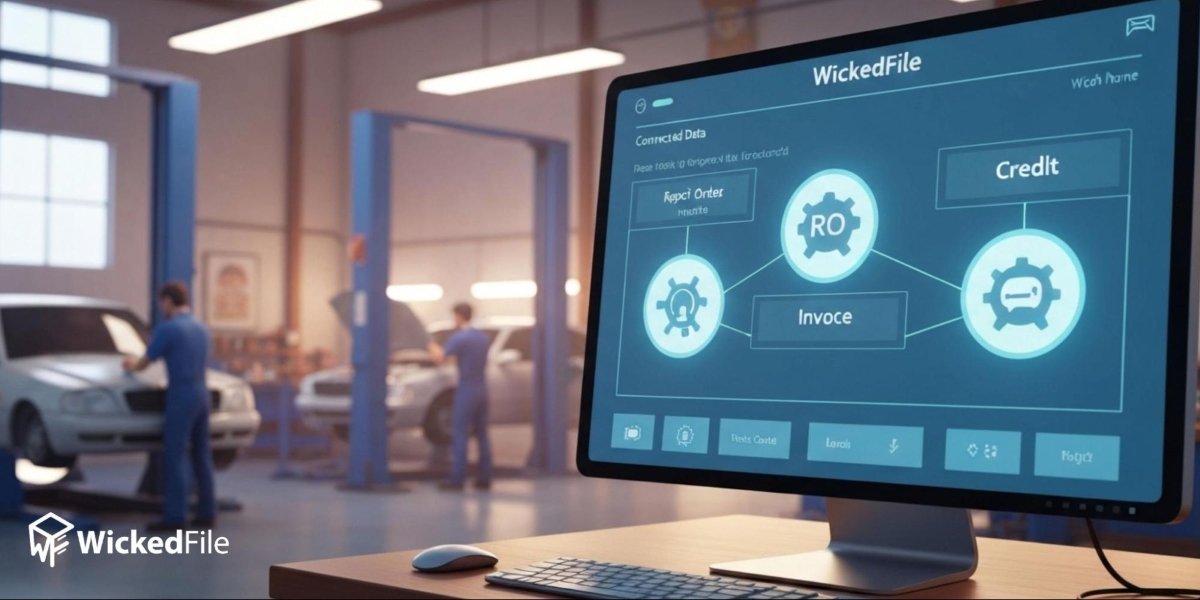
This is where WickedFile, the only platform built with Automotive shop margin protection AI, is designed specifically for repair shops. Unlike standard shop management tools that focus only on scheduling or invoicing, WickedFile connects all the dots—repair orders, invoices, vendor statements, and credits—to ensure your back office runs as efficiently as your service bays.

Here are 9 AI-driven strategies to consider before 2025 ends—so your shop can enter 2026 stronger, more organized, and more profitable.

1. Get Clearer Profit Visibility

AI isn’t just about automation — it’s about clarity. WickedFile’s Automotive shop margin protection AI connects your repair orders, invoices, and credits to show exactly where profits are earned or lost. You’ll see which jobs boost your bottom line and which ones quietly chip away at it.

2. Stop Deleted Repair Orders

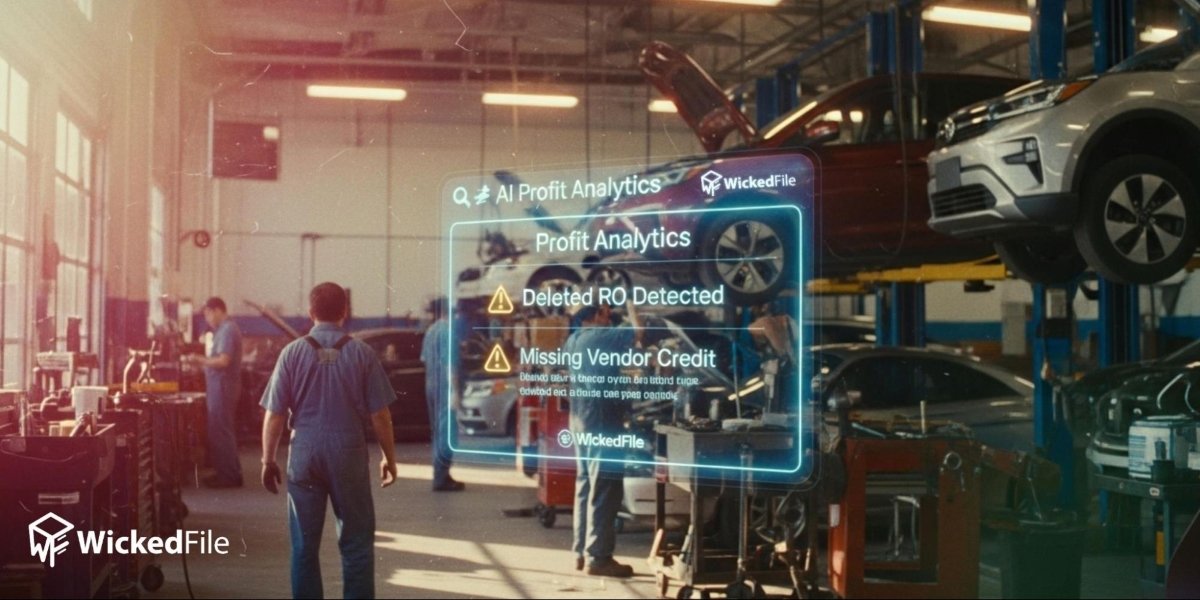
One of the biggest and most costly mistakes in auto repair is a Deleted RO. Every deleted repair order is a potential avenue for lost revenue—and it happens more often than most shops realize.

WickedFile allows you to get emailed automatically with updates on newly Deleted ROs. The AI alerts you at your schedule, ensuring every deleted RO is monitored so nothing slips through the cracks.

3. Protect Margins with Reconciliation

Margins shrink when financial data lags behind. WickedFile’s Automotive shop margin protection reconciles repair orders, vendor invoices, and credits in real time.

It automatically flags duplicate charges, missing credits, and mismatched numbers before they become silent profit drains. You’ll know exactly where your money is going—and where it’s leaking.

4. Strengthen Customer Communication

Today’s customers want clarity and quick answers. When you can instantly pull up their ROs, estimates, and invoices, it builds trust.

WickedFile keeps all of your documentation centralized and searchable, so when a customer asks about a charge or warranty, you can show them proof in seconds. Organized records lead to greater customer confidence—and that means more repeat visits.

5. Eliminate Hidden Revenue Loss

Missed credits, duplicate invoices, and unfiled warranty claims are the invisible killers of shop profitability. WickedFile constantly scans your financial records for these small but costly leaks.

Think of it as having a second set of eyes on every transaction—ensuring no money quietly slips away.

6. Improve Vendor Relationships

When your records are clean, disputes disappear. WickedFile stores all vendor invoices, credits, and agreements in one place and automatically links them to related ROs.

That makes it easy to resolve discrepancies quickly, maintain transparency, and strengthen long-term partnerships with your suppliers, especially when you can supply dealers with the original invoice for a returned part. Vendors trust organized shops—and that often translates into better terms and faster service.

9 AI Strategies with WickedFile to Grow Car Counts and Protect Margins Before 2025 Ends

Photo Courtesy: WickedFile

7. Scale Confidently into 2026

As the industry evolves—with more EVs, hybrid systems, and digital diagnostics—the paperwork behind each job is multiplying.

Whether you’re processing 100 or 1,000 repair orders a month, WickedFile ensures your back office can handle it. The platform automatically scales as you grow, keeping every file reconciled, every credit tracked, and every RO connected.

You’ll be ready to handle expansion without sacrificing organization or profitability.

8. Save Time for What Matters

Every hour spent digging for a missing invoice or manually reconciling parts is an hour lost from running your business.

WickedFile automates those tedious tasks so you can spend more time managing your team, serving customers, and planning growth. Shops report saving dozens of hours a month after implementing WickedFile’s automated reconciliation features.

9. Build Long-Term Credibility

Organization isn’t just about convenience—it’s about reputation. When every record, invoice, and credit is accurate and easy to verify, customers and vendors alike see your shop as reliable and professional.

WickedFile gives you that level of control, ensuring you always have clear, traceable documentation to back up your work. That credibility leads to repeat business, positive reviews, and stronger referral traffic—the kind of growth no marketing budget can buy.

Why Act Before 2025 Ends

Margins are already tight, and 2026 is shaping up to be even more demanding with new compliance standards, rising parts costs, and the continued growth of electric vehicles. Waiting until next year to streamline your operations means starting behind the curve.

By adopting WickedFile now, you’ll enter the new year with:

  • Organized and reconciled financial records.
  • Clear insight into your most profitable services.
  • Fewer missed repair orders and credits.
  • A scalable foundation for growth in 2026.

WickedFile: Built for the Modern Auto Repair Shop

Unlike generic AI tools, WickedFile was built from the ground up for the automotive repair industry. It works alongside your existing shop management system to:

  • Catch missing parts and uncredited cores.
  • Track vendor credits automatically.
  • Centralize repair orders, invoices, and statements.
  • Deliver real-time profit visibility.

WickedFile’s AI doesn’t just help you get busier—it enables you to stay profitable, organized, and future-ready.

As 2025 comes to an end, the choice for shop owners is clear: keep running on outdated systems that leak profits, or enter 2026 with the power of AI on your side.

With WickedFile’s, every repair order, invoice, and credit is accounted for—so your shop doesn’t just survive in the new year, it thrives.

👉 Use WickedFile to protect your margins and grow your car counts before 2025 ends. Because the smartest move you can make this year is ensuring next year’s profits are already protected.


Disclaimer: The information provided in this article is for general informational purposes only and should not be construed as professional financial or business advice. The tool described, WickedFile, is presented as a supplementary tool to existing software and business processes. While it aims to help auto repair shop owners identify financial discrepancies, it is not a guarantee of eliminating all financial losses or improving profits. Individual results may vary, and shop owners are encouraged to consult with a financial professional for personalized advice and to ensure that their financial processes meet their specific needs.

How Does LA’s Film Decline Affect California Aspiring Filmmakers

The film industry in Los Angeles has long been a cornerstone of the global entertainment landscape. However, recent years have seen a notable decline in production within the city. This shift has raised important questions about the impact on aspiring filmmakers in California, particularly those who have traditionally looked to Los Angeles as a place to start and advance their careers. The decrease in film production in the area reflects broader changes in the industry that could have lasting effects on both the established and emerging workforce.

What Are the Key Factors Behind the Decline of LA’s Film Industry?

The decline in Los Angeles’ film industry is not the result of a single factor, but rather a combination of shifting economic, technological, and cultural elements. Rising production costs in the city, including labor expenses and studio fees, have made it less attractive for filmmakers to work in Los Angeles. Additionally, the growth of streaming platforms has introduced a new set of dynamics, such as changes in where and how content is produced. Many streaming services are opting for filming locations outside California, where tax incentives and more favorable economic conditions are available.

The pandemic also played a significant role, disrupting production schedules and causing delays across the entertainment industry. In its aftermath, labor strikes further compounded the situation, impacting the overall output of film and television content. Although some production has resumed, the return to normalcy has been gradual, and the overall volume of work in Los Angeles has not fully recovered to previous levels.

How Does the Decline Affect Aspiring Filmmakers in California?

For aspiring filmmakers in California, the shift in the industry presents a range of challenges. Los Angeles has historically been a hub where emerging talent could find internships, work on entry-level projects, and make connections that would eventually lead to more substantial opportunities. As the number of productions dwindles, these entry points become harder to find. The shrinking market means that newcomers to the industry may have fewer opportunities to gain experience, network, and learn on the job.

Additionally, those trying to establish a foothold in the film industry often relied on the city’s infrastructure and resources. Studios, post-production facilities, and the general ecosystem that supports filmmaking in Los Angeles were once key factors in helping creatives build their careers. The reduction in production levels limits access to these resources, making it more difficult for those new to the field to take advantage of the opportunities that once existed.

What Are Aspiring Filmmakers Doing in Response to These Changes?

Despite the challenges posed by the decline in LA’s film industry, many aspiring filmmakers are finding ways to adapt to the changing environment. A significant shift has been the increasing reliance on independent filmmaking. Without the large budgets and high-profile productions typical of big studios, many filmmakers are focusing on smaller, more cost-effective projects. These projects often require fewer resources and can be produced with a leaner team, which aligns well with the current economic landscape.

Technological advancements are also providing more opportunities for aspiring filmmakers. With the rise of digital tools and accessible filmmaking equipment, the barriers to entry have lowered. Many filmmakers now have access to high-quality cameras, editing software, and distribution platforms at relatively affordable prices. These developments are allowing creators to produce and share their work independently, bypassing traditional studio systems. This shift has enabled filmmakers to find their audience through platforms such as video-on-demand services and social media channels, which were not widely available a few years ago.

Another response to the decline in Los Angeles-based production is the exploration of alternative filming locations. As more productions move to cities outside of California, some aspiring filmmakers are following suit, seeking out opportunities in other states or countries where tax incentives and lower costs make filming more feasible. This shift is pushing aspiring filmmakers to consider locations they might not have previously considered, expanding the potential landscape for creativity and production.

How Does the Decline Affect Film Education and Training in California?

Film education in California has traditionally been an important entry point for aspiring filmmakers. As the landscape of film production changes, educational institutions are also adjusting their approaches to prepare students for the evolving industry. Film schools and training programs that were once focused solely on traditional studio filmmaking are now incorporating more lessons on digital content creation, independent filmmaking, and new media formats. This broader focus helps students gain a wider range of skills that will serve them in a more diverse and fragmented industry.

Additionally, many film programs are emphasizing the importance of adaptability. As remote work and digital platforms grow in significance, the ability to work independently and manage multiple stages of production is becoming increasingly valuable. Students are being taught to use emerging technologies such as virtual production, which blends physical and digital worlds, and to work with flexible, smaller production models that can operate with fewer resources.

Networking and building industry connections remain key elements of any filmmaker’s career. However, as Los Angeles becomes less of a central hub for film production, aspiring filmmakers may need to turn to digital networking opportunities. Virtual events, online mentorship programs, and social media communities are becoming essential tools for filmmakers to connect with industry professionals and collaborators.

What Are the Long-Term Effects of This Decline on the California Film Industry?

While the short-term effects of the decline in Los Angeles’ film industry are already visible, the long-term impact is still developing. One possibility is that the film industry in California may undergo a form of decentralization. As productions continue to move to other areas with more favorable conditions, cities within California, such as San Francisco, Sacramento, and other emerging film hubs, could see increased activity. This could lead to a broader distribution of the industry’s economic benefits across the state, which might help support new talent in areas outside Los Angeles.

How Does LA's Film Decline Affect California Aspiring Filmmakers

Photo Credit: Unsplash.com

However, there are concerns about the erosion of infrastructure that has supported the film industry in California for decades. Large studios, post-production facilities, and technical support services in Los Angeles have played a critical role in sustaining the industry. As fewer productions take place in the city, there is a risk that these support systems could be weakened, making it more difficult for filmmakers to access the tools and expertise they need.

Additionally, the loss of on-location filming opportunities may lead to a shift in the types of films and stories being told. As productions move away from traditional Hollywood settings, filmmakers may be more likely to explore different narratives and filming techniques that reflect the diverse landscapes and cultures found across the country and the world.

What Does the Future Hold for Aspiring Filmmakers in California?

The future of aspiring filmmakers in California remains uncertain, but there are signs that the industry will continue to evolve. While Los Angeles may no longer be the uncontested epicenter of filmmaking, other areas within California and beyond may offer new opportunities for filmmakers to grow their careers. Emerging digital platforms and streaming services could offer a more direct route for filmmakers to share their work with global audiences, bypassing traditional distribution methods.

However, the decline of Los Angeles as the primary location for film production may require aspiring filmmakers to be more flexible and resourceful. The ability to adapt to new technologies, explore independent filmmaking, and work in non-traditional locations will likely become more important as the landscape of the industry continues to shift.

In the coming years, aspiring filmmakers in California will need to be proactive, continuously learning and adjusting to new trends. The decline of Los Angeles’ film industry doesn’t necessarily signal the end of opportunities for filmmakers, but rather a transition to a more diversified, decentralized, and digitally integrated industry.