Diverse Stories, Powerful Lessons: How Diane Ward Is Shaping Children’s Minds

By: Seraphina Quinn

Children are afraid of many things—whether it’s the dark, spiders, or even homework. But what if a simple story could help them overcome those fears? Diane Ward, a former teacher with 24 years of experience, has taken that challenge head-on with her series of children’s books, starting with Patty Poo’s Fear, a heartwarming tale about overcoming the fear of snakes.

Ward’s work doesn’t stop at offering a cute story for bedtime. It dives into the complex emotional landscapes that children often struggle to articulate, providing readers with lessons in courage, hope, and the importance of community.

For Ward, writing wasn’t the obvious next step after retiring from her teaching career in Florida. But it was a natural fit. After decades of teaching language arts to children, she intimately understood the power of a good story. Yet, it wasn’t until her retirement that she finally sat down to weave together the worlds and characters that had lived in her imagination for years.

Her background, rich with multicultural experiences from her childhood in Northeast Pennsylvania, became the canvas for her stories. She drew inspiration from the patchwork communities of her upbringing, where European immigrants brought their traditions to the coal mining valleys. In her book, the fictional neighborhood reflects this diversity, featuring African American, Irish American, and Mexican American families who come together despite their differences.

At the heart of The Cul-de-sac Kids Fears is the idea of confronting what frightens us. Inspired by Ward’s own fear of snakes—a fear she faced head-on—Patty Poo’s journey teaches young readers that fears, no matter how daunting, can be managed and even overcome. Several other characters become the highlight of her book. 

Ward recounts an incident where she saw a snake in her backyard: “I froze,” she admits. “But instead of running away, I stood my ground, even though I was screaming inside.” That personal experience is mirrored in Patty Poo’s story, where a trip to the pet store helps Patty gradually confront her fear of snakes, moving from terror to respect. This grounded approach to dealing with fear is what makes Ward’s work so impactful. 

Beyond the lessons of courage, Ward’s books are built on the foundation of friendship and community. In an era where many children grow up in fractured families or face instability at home, Ward wanted to provide a narrative that feels like a safe space. The families in her stories—supportive, caring, and intertwined—offer young readers a sense of security, reminding them that even in a chaotic world, strong bonds and positive environments can exist.

Ward draws from her years of experience teaching children, many of whom came from difficult backgrounds. She saw firsthand how much children are affected by their environment and the adults around them. Through her stories, Ward hopes to leave a lasting message: that with the right support, children can overcome even the most intimidating obstacles.

Ward’s passion for animals shines through her characters as well. Pets play a significant role in her books, offering unconditional love and comfort to the children in her stories. Chili, a beloved dog in the series, is based on Ward’s own dog, while Lucy is modeled after her daughter’s beagle mix.

Animals not only provide companionship but also help teach important lessons about responsibility and empathy. Ward believes that including pets in her stories helps children relate on a deeper level, making the lessons she’s trying to impart all the more impactful.

One of the most intriguing aspects of Ward’s creative process is her approach to writing. Despite being a planner when it comes to other parts of her life, she never planned a single story. Instead, Ward lets the story unfold naturally, asking herself at each step, “What happens next?” It’s an intuitive process, one that has resulted in a series of books that flow with ease and keep young readers engaged from start to finish.

When asked how she manages to capture the attention of children in an era of distractions, Ward credits her years in the classroom. Given that she knows how quickly kids lose interest she tries to keep the stories moving. There’s always something happening, whether it’s a trip to the pet store or a moment of crisis where the characters have to help each other.

Ward’s books are not just fun adventures—they’re designed to resonate with children long after the final page. Each story includes vocabulary and activities at the end, ensuring that the lessons learned stay with the reader. As she begins a new chapter of her life, one thing is certain: she’s not just writing children’s books—she’s writing stories that will change lives.

Published by: Josh Tatunay

Exploring the Dualities of Leadership with Patricia McLagan

By: Seraphina Quinn

Patricia McLagan trades in the currency of power—not the type that corrupts, but one that reveals the hidden dimensions of leadership. Having lived in Minnesota, South Africa, and now, Washington DC, McLagan sees power as a paradox, invisible yet weighty, continuously influencing those who hold it.

What would a world look like where leadership is measured by depth rather than height? The deeper you delve, the darker and more complex the choices become. McLagan’s latest work, The Shadow Side of Power: Lessons for Leaders (and Their Supporters), is far more than a mere novel about leadership. It plunges into the inferno of decision-making, where each choice could lead either to enlightenment or damnation. Here, power is cultivated not with a gavel but with the delicate care of a gardener nurturing fragile seeds—seeds that might bloom into fairness and insight or decay into despotism and regret.

With over fifty years at the forefront of human and organizational development, McLagan’s unorthodox yet essential approach maps the shadows where many leaders falter, guiding them through the treacherous currents of authority and influence. Her narrative serves both as a reflection and a beacon of positive leadership.

In her revolutionary exploration, McLagan introduces her infamous paradoxical concept as leaders ascend the ladder of command. They must also deepen their commitment to accountability and empathy. Her latest book acts as both a compass and a map for navigating this labyrinth. McLagan doesn’t just instruct on leadership; she illustrates the vast psychological and ethical terrains leaders must navigate to lead effectively.

Every leader might feel ready for the throne, but are they prepared for the dungeon that accompanies it? This challenge is not just rhetoric—it is a gauntlet thrown at the feet of those daring to lead. McLagan paints a world where leaders confront their shadows not for combat but for introspection and growth. This journey through leadership is less about sidestepping the pitfalls of power and more about understanding that these pitfalls are integral to the journey itself.

Her book unfolds as a journey with both a hero and a guide, delving deeper into a leadership inferno where each circle exposes different facets of power misuse or abuse. Readers become participants, reflecting on their own roles as leaders or followers. What would you do if faced with the ultimate test of your values? The book challenges, underscoring that its lessons are meant for application as well as contemplation.

What renders McLagan’s work both timeless and timely is its resonance with current events. In an era rife with corporate scandals and political turmoil, her insights act as a cautionary tale. Her characters, like many of today’s leaders, wrestle with the allure of power and its propensity for ethical lapses.

However, McLagan doesn’t leave her readers mired in despair. Instead, she delineates a path out of the inferno through self-awareness and integrative thinking. Leaders are urged to merge analytical and intuitive skills, acknowledging that modern challenges demand a holistic approach—a recurring theme in McLagan’s narrative.

The Shadow Side of Power: Lessons for Leaders (and Their Supporters) not only mirrors the pitfalls that snare leaders but also charts a course toward ethical and effective leadership. McLagan’s narrative is as educational as it is transformative. As the world navigates through turbulent times, her work continues to serve as a guiding light in the shadowy corridors of power.

This raw, unfiltered perspective laid bare in her latest work offers a guide that is anything but typical. With a story-driven approach, she leads readers through a Dante-esque journey across the seven circles of power, where integrity is paramount and misuse is chastised. In a world where the abuse of power is increasingly common, McLagan’s message transforms from a mere warning to a compelling call to action.

With her deeply philosophical yet accessible take on leadership, McLagan not only reaffirms her status as a thought leader but also as a pioneer, exploring the uncharted territories of what it truly means to lead in a world that too often celebrates power without grasping its true essence.

Published by: Josh Tatunay

Transforming Elder Care: Chris White’s Vision for Dignity

Chris White is a passionate advocate for change in the elder care system, pushing for reforms that prioritize the dignity, independence, and overall well-being of seniors. His advocacy is driven by a deep belief that the traditional models of elder care are outdated, often focusing on basic physical needs while neglecting the emotional, social, and mental health aspects that are crucial to quality of life. Chris is determined to transform these systems to ensure that elderly individuals are treated with the respect and care they deserve.

As an advocate, Chris calls for a more personalized, person-centered approach to elder care, where the unique needs and desires of each senior are considered. He promotes the idea of smaller, community-based care environments, which foster a sense of belonging and connection, as opposed to large, institutional settings that can feel impersonal and isolating. His vision includes the integration of modern technologies to enhance care, preventive health measures to maintain vitality, and greater support for family involvement in the care process.

Chris White’s advocacy extends to policymakers and industry leaders, urging them to rethink how elder care is structured and delivered. He believes that by reimagining elder care as a system that supports the holistic needs of seniors—emotionally, mentally, and physically—society can create a more compassionate and empowering environment for aging. His mission is to elevate the standard of care for elders, ensuring they live with dignity, purpose, and the highest quality of life.

Chris White’s mission to revolutionize elder care is driven by his desire to provide seniors with the dignity, respect, and personalized attention they deserve. He recognizes that the traditional elder care system often focuses too much on basic needs and not enough on the holistic well-being of older adults. Chris aims to shift the focus to a more person-centered approach, where emotional, mental, and social support are as essential as physical care.

He is a strong advocate for transforming elder care environments into places that foster independence, engagement, and purpose. His approach involves creating smaller, community-oriented care models where seniors have access to personal connections and greater autonomy. Chris also champions the use of innovative technologies and wellness programs that enhance the quality of life for elders, allowing them to age gracefully in a supportive environment.

Chris White is dedicated to transforming the way society approaches elder care by promoting systems that value and empower older adults. He believes that seniors deserve more than just basic care; they deserve environments that honor their unique identities and contribute to their overall well-being. His mission focuses on replacing outdated, impersonal models of elder care with solutions that are forward-thinking, compassionate, and holistic. This includes smaller, community-based care models that foster personal connections and offer greater autonomy to seniors. By integrating modern technologies and wellness programs, Chris aims to enhance the quality of life for the elderly, allowing them to age gracefully with dignity, purpose, and support. He advocates for a person-centered approach that considers the emotional, mental, and social aspects of aging, not just the physical needs. His vision also includes encouraging greater family involvement in the care process, creating a nurturing and supportive environment for seniors. Through his efforts, Chris White seeks to elevate the standard of elder care, ensuring that seniors are treated with respect and have access to the resources they need to thrive in their later years. Ultimately, his goal is to create a more compassionate, empowering culture that enriches the aging experience.

Published by: Holy Minoza

CloudWerx Demos Innovative New GenAI at Google Cloud Live: “Match My Mood” App Revolutionizes Retail Sales

By: Zach Miller

Driving Delightful Shopping Experiences with AI

As consumer behavior continues to evolve, retailers are facing a heightened demand for personalization, inclusivity, and sustainability. This shift is particularly noticeable among younger generations, especially Gen Z, whose shopping habits are reshaping the retail landscape. Brands must innovate rapidly to meet these needs, and AI-powered solutions like Match My Mood offer a new frontier in personalized shopping experiences. CloudWerx showcased the new GenAI-driven app at the Google Cloud Live: Bay Area event earlier this month to a crowd of more than 1,000 attendees.

The Struggles of Finding the Perfect Look

Finding the right look online can often feel like an overwhelming task. Consumers are inundated with choices, leading to frustration and increased likelihood of returns. Retailers are innovating to combat these challenges by embracing AI technologies that provide unparalleled personalization, streamline the customer journey, and ultimately increase cart sizes.

A New Era in Shopping

A new trend shows that a growing demographic of online shoppers increasingly prioritize sustainability and personalization in their purchasing decisions. According to recent data, 78% of consumers shop online at least once a month, and 61% are more likely to support brands that incorporate advanced technologies such as AI, augmented reality (AR), or virtual reality (VR).

These consumers are part of a generation where self-expression is key. 82% of people feel their clothing choices communicate their identity, and 71% are more inclined to purchase from brands that allow customization or personalization. This demographic seeks items that fit specific aesthetics, often tied to online subcultures or moods. Match My Mood capitalizes on this trend by providing consumers with tailored fashion suggestions based on various preferences.

Moreover, Gen Z’s preferences extend beyond mere aesthetics. This generation is particularly focused on sustainability and social responsibility. A significant 75% prefer shopping from sustainable brands, and 47% actively avoid those that aren’t. Inclusivity is also crucial—41% identify as gender-neutral, and 28% identify as LGBTQ+, indicating a clear need for brands to prioritize diversity and inclusion in their product offerings.

AI at the Forefront of Personalization

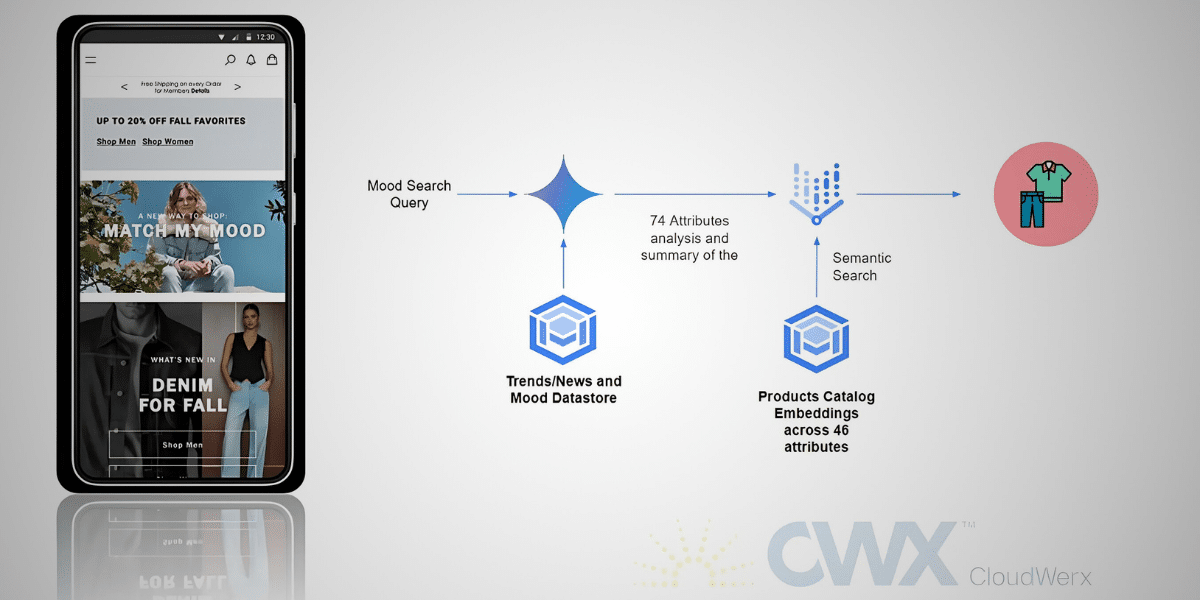
AI has become the silent partner in retail, driving the behind-the-scenes operations that enable personalized shopping experiences. Match My Mood’s AI solutions are built to enhance this journey, using data to power customization at every touchpoint. For example, Gemini and Vertex AI can analyze and interpret vast datasets, delivering fashion recommendations that align with a user’s current mood or a specific trend they follow.

A typical search query, such as “Taylor Swift Travis Coachella,” pulls in fashion insights based on not only the event but also mood-based attributes such as color scheme, fabric texture, and even lighting conditions. These attributes are compiled from a range of sources, including trends, product catalogs, and customer feedback, to provide shoppers with curated options that resonate with their personal style and the occasion.

74 Attributes of Personalization

The technology behind Match My Mood leverages an impressive array of attributes to deliver these personalized experiences. For fashion recommendations, it analyzes 74 distinct attributes such as fit, neckline, sleeve type, and material. Beyond fashion, the AI system has the potential to be applied to other categories like perfumery, makeup, and home décor.

By breaking down the complexity of fashion and mood into a set of data points, AI systems can build a profile of what the user might like or find relevant, making each interaction more personalized than the last. Retailers benefit from increased conversion rates, reduced returns, and an overall enhancement in customer satisfaction.

Beyond Fashion: Expanding Use Cases

While Match My Mood is currently making waves in the fashion industry, its applications extend to other consumer goods. The same AI-driven technology could be used to recommend beauty products, books, or even furniture, each time tailoring suggestions based on mood and aesthetic preferences. This flexibility makes it a versatile tool for retailers across a range of industries.

Moreover, the semantic search capabilities integrated into the platform enhance the precision of the recommendations. These searches take into account not only the literal terms the consumer enters but also the contextual meaning behind them. This minimizes errors and ensures that the suggestions are closely aligned with the consumer’s actual desires.

The Future of Retail Is AI-Driven

As AI continues to evolve, it’s clear that the future of retail will be driven by data and machine learning. The ability to offer tailored, mood-based suggestions across various product categories will soon be a baseline expectation for consumers. For retailers, this shift represents a significant opportunity to differentiate themselves in a crowded market by providing experiences that are not only functional but also emotionally resonant.

By integrating platforms like Match My Mood, retailers can create seamless, enjoyable shopping experiences that cater to the modern consumer’s desire for personalization, inclusivity, and sustainability. As shopping becomes more immersive and aligned with individual values, AI will remain a critical tool in building stronger, more meaningful relationships between brands and their customers.

In an era where consumers are more discerning than ever, technology will be the key to not only meeting but exceeding their expectations. Brands that embrace this AI-driven future will find themselves well-positioned to thrive in a rapidly changing retail landscape.

Published by: Holy Minoza

The Magical World of the Book Series, The Future King

Fantasy literature has always held a special place in the hearts of readers, offering a doorway to mythical realms where heroes, villains, and magical beings engage in epic struggles. Few legends have endured as powerfully as the tale of King Arthur and his knights of the Round Table, a story steeped in both grandeur and tragedy. However, in The Future King, award-winning author Vishnul Jain has breathed new life into this ancient myth, reimagining the legend in a way that captivates modern readers and weaves together a narrative of redemption, second chances, and cultural richness.

A New Vision of the Arthurian Legend

The Future King presents a bold and optimistic continuation of the Arthurian tale, picking up where the traditional narratives leave off: after the Battle of Camlann. The battle, which led to King Arthur’s fall and the disintegration of his kingdom, marks the end of many classic retellings. But where these tales conclude with a sense of loss and finality, Jain’s version presents a world where redemption is possible and a second chance awaits the fabled king and his companions.

Central to this reimagining is the figure of Merlin, the legendary wizard, who returns in this series with renewed purpose. In many previous Arthurian retellings, Merlin’s role was tied to the rise of Arthur, guiding him to kingship, only to fade into the background after the king’s fall. In The Future King, Merlin plays an essential role, becoming a central figure in the narrative. Jain’s Merlin is not just a wise advisor but a complex, multi-dimensional character grappling with his own failures and seeking his own redemption. The return of Merlin in this story breathes new magic into the Arthurian universe, emphasizing the timeless relevance of his character.

A Rich Tapestry of Myth and Culture

One of the aspects that set The Future King apart from other fantasy series is its ambitious world-building. While the foundation of the story rests on the well-known Arthurian mythos, Jain expands the universe by incorporating a wide array of cultural myths and legends. Readers are introduced to a world that blends the familiar with the unexpected, offering a rich diversity of mythological references from across the globe.

Jain masterfully integrates elements from a variety of traditions, giving depth to the story and adding a unique flavor that distinguishes The Future King from more conventional Arthurian retellings. This cross-cultural integration creates a tapestry of interconnected myths, allowing readers to explore new dimensions of the fantasy genre. By bringing together such diverse influences, Jain appeals to a broad audience, drawing in readers from different cultural backgrounds while enriching the narrative with universal themes of heroism, loss, and hope.

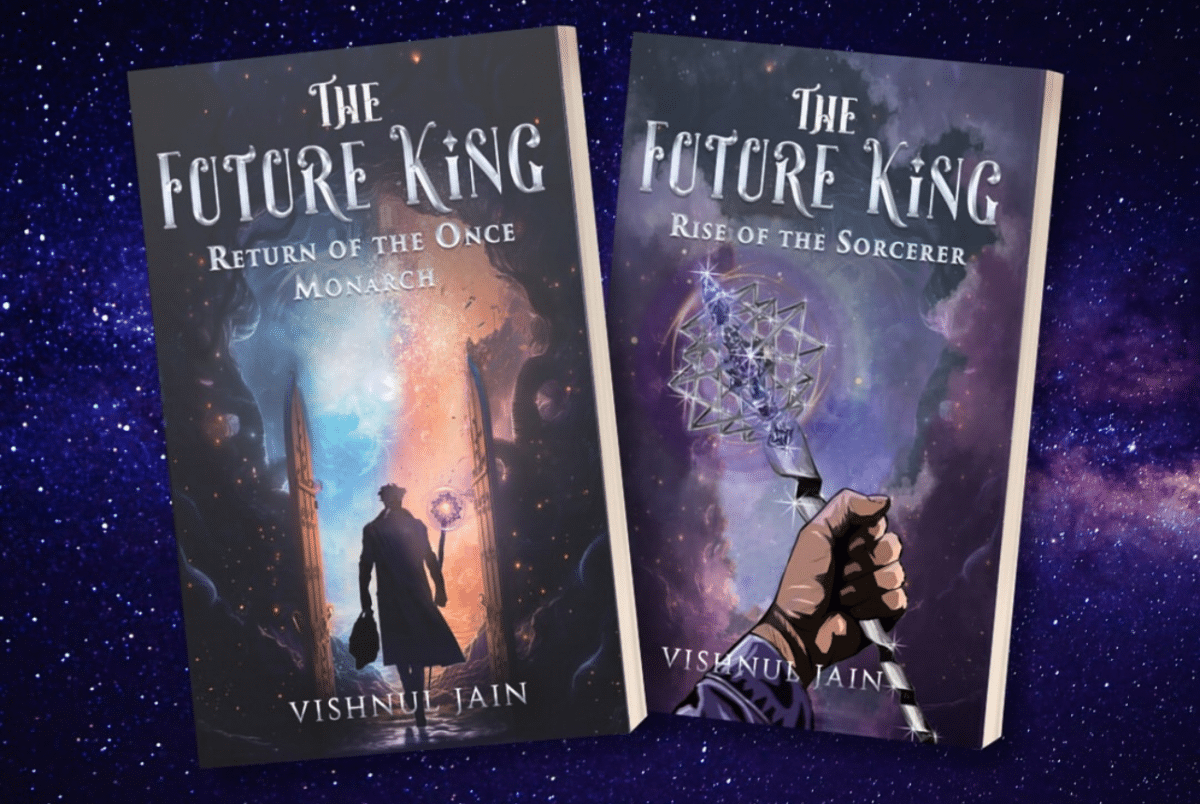
The Magical World of the Book Series, The Future King

Photo Courtesy: Vishnul Jain

Complex Characters and Multi-Dimensional Plots

In addition to its intricate world-building, The Future King excels in crafting characters with depth and complexity. Rather than relying on archetypal portrayals of good versus evil, Jain presents characters who are nuanced and layered, driven by both their virtues and their flaws. This includes a reimagined King Arthur who is not simply the righteous monarch of old but a man shaped by his failures and the burden of leadership.

The series explores the inner lives of its characters in a way that resonates with readers. Each major figure—be it Arthur, Merlin, or the knights of the Round Table—is portrayed as both heroic and deeply human. The concept of redemption plays a pivotal role throughout the series, as characters seek to correct past mistakes and reclaim their sense of purpose. This focus on second chances gives The Future King an emotional depth that goes beyond typical fantasy epics.

The storylines in The Future King are equally multi-dimensional. Jain skillfully weaves together a variety of plotlines, combining political intrigue, personal quests, and mystical challenges. The result is a narrative that keeps readers engaged, balancing action with reflection, and always driving the characters toward new realizations about themselves and the world around them.

Recognition and Critical Acclaim

The success of The Future King is not only evident in its growing fanbase but also in the critical recognition it has received. The series has won numerous accolades, including The BookFest Award, the Golden Wizard Book Prize, Literary Titan Award, Firebird Book Award, and the prestigious Readers’ Favorite Award in the category of Young Adult Fairy Tale. These honors speak to the series’ excellence in both storytelling and craftsmanship, as well as its impact on the fantasy genre. Moreover, the book cover won the Illustration Award of the Year by Readers’ Favorite in the category of Young Adult.   

Reviewers have praised Jain’s work for its refreshing take on a well-known legend, lauding the author’s ability to blend traditional fantasy with modern themes. The series’ emphasis on redemption and its optimistic outlook have resonated with readers, many of whom have found The Future King to be a breath of fresh air in a genre often dominated by darker, more dystopian narratives.

A Journey of Redemption and Second Chances

At its core, The Future King is about second chances. The theme of redemption is woven into every aspect of the story, from the personal journeys of the characters to the overarching plot. King Arthur’s return, Merlin’s renewed quest, and the knights’ attempts to rebuild their shattered world all speak to the idea that even in the face of great failure, hope remains.

Jain’s approach to this theme is both inspiring and profound. Rather than focusing on the finality of past mistakes, The Future King emphasizes the power of transformation. Characters who once believed they had reached the end of their journeys find new purpose, and the story itself becomes a testament to the enduring possibility of change.

A Modern Classic in Fantasy Literature

The Future King by Vishnul Jain stands as a shining example of what fantasy literature can achieve when it dares to reimagine the past. Through its complex characters, diverse mythological influences, and compelling themes of redemption, the series offers a new perspective on the Arthurian legend while retaining the timeless appeal of its source material. For readers seeking a richly layered, emotionally resonant story, The Future King is a series that promises both adventure and reflection.

To learn more about The Future King, visit vishnuljain.com or follow the author on Instagram at @vishnuljain. The series is available for purchase on Amazon, with The Future King: The Return of the Once Monarch as a must-read entry into this captivating world.


Published By: Aize Perez

Step Into a Wes Anderson Dream: The Budapest Café in Chengdu

The Budapest Café in Chengdu, China, offers visitors the surreal experience of stepping into a Wes Anderson film. Inspired by the filmmaker’s iconic aesthetic, the café brings his whimsical, symmetrical, and pastel-colored world to life, making it a must-visit destination for design lovers and fans of Anderson’s cinematic style. Designed to evoke the dreamlike charm of Anderson’s movies, The Budapest Café immerses guests in an environment that feels both fantastical and cinematic, blending a unique interior design with a laid-back café experience.

The Wes Anderson Aesthetic

Known for films like The Grand Budapest Hotel and Moonrise Kingdom, Wes Anderson’s distinct visual style is defined by meticulous symmetry, bold color palettes, and retro-inspired design. The Budapest Café in Chengdu draws heavily from these elements, creating a space that feels straight out of Anderson’s filmography. With its playful use of pastel pinks, mint greens, and soft lighting, the café captures the nostalgic and quirky atmosphere that Anderson’s films are famous for.

Every detail of The Budapest Café’s design reflects the filmmaker’s aesthetic, from its geometric patterns to the carefully arranged furnishings. The café’s interior features curved archways, terrazzo flooring, and brass accents, all of which contribute to the sense of stepping into a meticulously crafted, storybook world.

A Destination for Design Enthusiasts

The Budapest Café has quickly become a favorite destination for design enthusiasts and travelers seeking an Instagram-worthy experience. Its visually stunning design makes it a popular spot for photographers and influencers looking to capture the essence of Wes Anderson’s cinematic world. Whether seated at one of the café’s pastel-colored tables or admiring the symmetrical layout of the space, visitors are transported into a scene that feels like it belongs in one of Anderson’s films.

The attention to detail in the design is what makes The Budapest Café stand out. From the vintage-style chairs and booths to the oversized globe lights, every element is carefully curated to evoke a sense of nostalgia and whimsy. This thoughtful design extends to the café’s menu, which features artistic presentations that align with the overall aesthetic.

Culinary Experience Meets Cinematic Design

While the design of The Budapest Café is its striking feature, the café also delivers on its culinary offerings. The menu is a fusion of European-inspired dishes and local Chinese flavors, making it a unique dining experience that complements the visual feast of the surroundings. From artisanal coffees and pastries to savory dishes, The Budapest Café offers a variety of options that appeal to both casual visitors and food enthusiasts.

The café’s desserts are particularly popular, with delicately crafted pastries and cakes that mirror the café’s artistic presentation. Visitors can enjoy their treats in the stylish surroundings, making it a sensory experience that combines visual beauty with delicious flavors.

A Wes Anderson-Inspired Destination in Chengdu

Chengdu, a city known for its rich cultural heritage and culinary delights, is an unexpected yet fitting location for The Budapest Café. The café adds a touch of European charm to Chengdu’s vibrant landscape, offering both locals and tourists a unique destination to escape into a fantastical world. As more travelers seek out unique, design-driven experiences, The Budapest Café has become a standout attraction in the city.

For those familiar with Wes Anderson’s work, the café feels like a love letter to the director’s unmistakable style. It captures the dreamy, nostalgic feel of his films while providing a modern, immersive space for guests to enjoy. Whether for a quiet coffee or a playful photoshoot, The Budapest Café offers an escape into a whimsical world that feels both cinematic and surreal.-

Conclusion: A Must Visit Café for Wes Anderson Fans

The Budapest Café in Chengdu, China, is more than just a café—it’s a Wes Anderson-inspired dream brought to life. With its meticulously crafted design, playful color palette, and cinematic ambiance, the café offers visitors a unique experience that captures the magic of Anderson’s films. Whether you’re a design enthusiast, a fan of Anderson’s work, or simply looking for an unforgettable café experience, The Budapest Café is a must-visit destination.

For more details on this Wes Anderson-inspired café, read the full article glamtabloid.com


Published by: Khy Talara