Community Power: How Stephen and Chelsey Diaz Built a Thriving Support Network with The Rainmaker Family

By: Seraphina Quinn

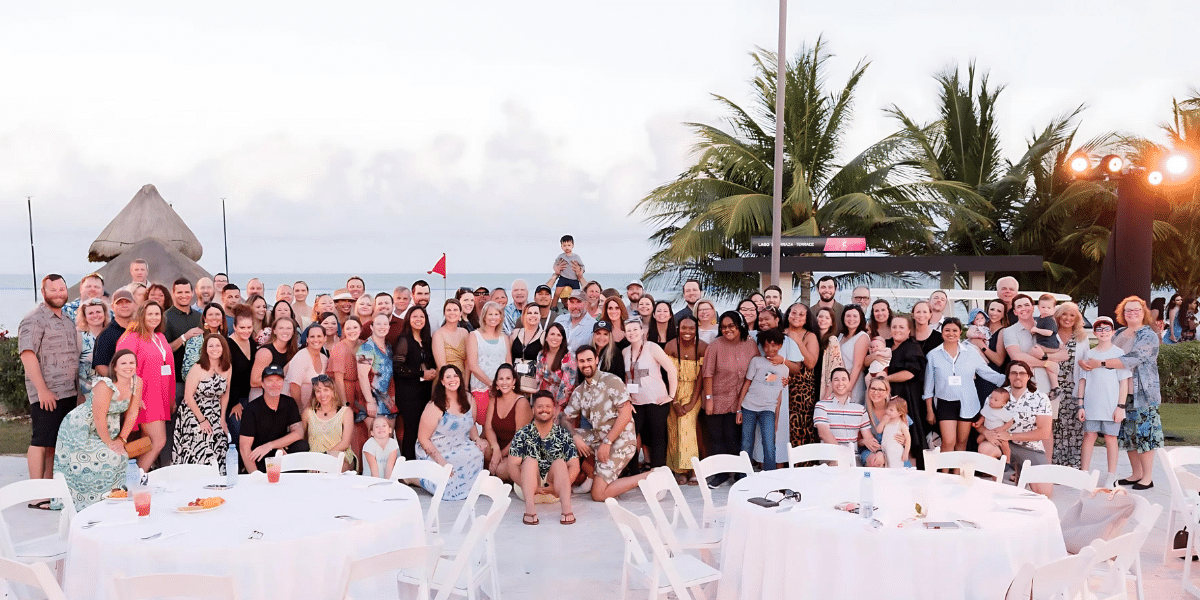
Building a successful business is often seen as a solitary journey marked by individual effort and perseverance. However, for Stephen and Chelsey Diaz of Rainmaker Family LLC, the power of community has been a cornerstone of their entrepreneurial strategy. Their approach to creating a supportive network has not only shaped their business but also transformed the lives of many within their community.

The origin of The Rainmaker Family is rooted in a personal challenge. Stephen and Chelsey initially ventured into entrepreneurship through their wedding photography business. Despite their success, they faced significant stress and burnout, which led them to seek a more sustainable path. Their exploration of various opportunities eventually led them to the concept of growth through Amazon FBA. However, their journey did not just revolve around finding the right business model; it also involved building a community that could support and sustain their new ventures.

One of the key elements in their success was understanding the concept of leverage—not just in terms of business tools but also in human resources. They recognized early on that building a thriving community was essential for long-term success. This realization came after a period of “spaghetti years,” where they tested various business ideas, learned from their mistakes, and eventually decided to focus on what had the most potential for growth. During this time, they also understood the importance of surrounding themselves with a positive and engaged community.

The Rainmaker Family’s community-centric approach is reflected in their Rainmaker Method, which emphasizes leverage, solution, and automation. The method is designed not only to teach families how to succeed in e-commerce but also to foster a supportive environment where members can share their experiences and insights. This community support plays a crucial role in helping members navigate the challenges of starting and scaling an online business.

Creating a sense of community was not merely a business strategy but a deeply personal mission for the Diazes. They understood that the entrepreneurial journey can be isolating, and they wanted to build a network where members could find encouragement, share resources, and learn from one another. This led them to establish various initiatives within their program, including online digital communities and events like “speed friending.” These efforts help new members connect quickly and meaningfully, accelerating their integration into the Rainmaker Family network.

The benefits of this community-driven approach are evident in the success stories of many Rainmaker Family members. The supportive network has been instrumental in helping individuals overcome obstacles and achieve their business goals. For instance, families who join the program often find themselves not just learning new skills but also becoming part of a larger, collaborative effort that fosters mutual growth and support.

Building this community has not always been without its challenges. Stephen and Chelsey have faced the complexities of managing a large and diverse group of individuals, aiming that the community remains positive and productive. However, they view these challenges as opportunities to enhance their support systems and improve the overall experience for their members. Their commitment to nurturing a thriving community underscores the belief that success is not just about individual achievements but also about the collective progress of the group.

In conclusion, The Rainmaker Family’s emphasis on community power has been a pivotal factor in their success. By prioritizing the creation of a supportive network, Stephen and Chelsey Diaz have built a business model that not only thrives on leverage and automation but also values the importance of human connections. Their approach serves as a testament to the profound impact that a strong, engaged community can have on achieving entrepreneurial success.


Published By: Aize Perez

Why Human Connection Still Rules in Silicon Valley’s High-Tech World

By: John Glover (MBA)

Covering Silicon Valley industry news now for several years, I’ve seen countless startups rise and fall. Behind every headline-grabbing success or sudden failure, there’s always one constant: the critical relationship between founders and investors. It’s a dynamic that fascinates me—not just because of the money at stake, but because of the human element behind every pitch, every handshake, every deal made or lost. In a world driven by innovation and speed, understanding how these partnerships form and thrive is a story that deserves more attention.

That’s why I sat down to explore the insights of Bill Barry, a seasoned player in Silicon Valley’s ecosystem and founder of IgniteGTM. He has seen firsthand how these relationships evolve and what it takes for founders to navigate the complexities of securing investment in such a high-pressure environment. His experiences offer a glimpse into the real stories behind the funding deals, where ambition and human connection are intertwined.

“The important thing I’ve learned is that the founder-investor relationship is fundamentally a relationship,” says Barry. This sounds simple, but its implications run deep. While many might assume investors are driven primarily by metrics and financial potential, Barry emphasizes that, in reality, investors are often betting on the individual, not just the product. In fact, the human connection between the founder and the investor often makes the critical difference in securing funding.

But establishing this rapport is no easy feat, especially in an environment as competitive and high-pressure as Silicon Valley. Founders frequently grapple with how to convey the complexity of their vision in a digestible way. “Taking a complex idea and communicating it into an understandable, concise story is key,” Barry explains. Many founders struggle to simplify their concepts, and that can be a deal-breaker.

A fitting real-world example of this comes from Dropbox’s early days. The company’s founder, Drew Houston, was pitching a revolutionary idea of a seamless file storage system that felt almost too simple to explain. Investors initially questioned the need for such a service when plenty of other cloud storage solutions existed. However, Houston’s ability to break down his vision into a simple, relatable problem—everyone experiences the frustration of emailing large files—allowed him to secure the necessary funding. 

Another classic case is Airbnb. Brian Chesky and his co-founders faced immense skepticism from investors about their concept of renting out air mattresses in people’s living rooms. What could have been written off as a quirky and unsustainable idea became a billion-dollar business because Chesky didn’t just sell a product; he sold an experience. He focused on the emotional appeal of trust and community. Founders who manage to connect with investors on a human level, showing not just how their product works but how it addresses fundamental human needs, stand out in Silicon Valley’s crowded marketplace.

Barry has seen this principle in action through the events he facilitates. He recalls witnessing founders pitch their startups to investors in social settings—a far cry from the formal boardroom presentations many imagine. “Hearing a funder challenge a founder’s chosen marketing path or vertical for launch can reveal a founder’s leadership style,” Barry explains. In these moments, founders are forced to think on their feet, and it’s not just their product that’s being tested but their adaptability and resilience. Some founders flounder, while others rise to the challenge, evolving their ideas on the spot.

The complexities don’t end with pitching. Barry points out that many founders falter when it comes to their financial strategies. “Many want to build the all-famous hockey stick of upward growth without building a solid go-to-market plan to support it,” he notes. This over-reliance on growth projections without grounded strategies for execution can make even promising ideas appear unstable to investors. It’s a harsh reality in Silicon Valley: ambition without a solid strategy is a gamble few investors are willing to take.

For those just entering the ecosystem, Barry offers some sage advice: “The time to launch is NOW, not when the product is ready.” In a space where agility is everything, waiting too long can mean missing the market entirely. Founders should be prepared to test and iterate quickly, because Silicon Valley doesn’t wait for perfection—it rewards speed, resilience, and adaptability. If we want to see this in action, Tesla’s Elon Musk, launched the first Tesla Roadster in 2008 with a prototype that was far from perfect. The company continued to iterate on its product while already being in the market, and today Tesla dominates the electric vehicle industry.

While technology, particularly AI, is increasingly playing a role in Silicon Valley’s evolution, Barry remains confident that the human element in founder-investor relationships will persist. “No matter what happens, I do not see a time where humans rely on AI to choose which founder to invest their high-risk capital,” he reflects. The relationship-based nature of investing is simply too personal for algorithms to take over entirely. The chemistry between a founder and an investor, the gut feeling that one inspires in the other, is a distinctly human phenomenon.

So where do we go from here? Barry sees opportunities for growth but also challenges on the horizon. Founders will need to adapt to new technologies, investors will need to remain flexible, and both parties will need to prioritize human connection. While the tools of the trade may change, the dance between founders and funders remains as vital—and as complex—as ever.

Published by: Holy Minoza

From Refugee to Entrepreneur: Kathy Phuong Luu’s Rise

By: Hal Johnson

‘Journey to the West: The Biography of Kathy Phuong Luu’ reveals the incredible path of a woman who faced immense challenges and emerged as a successful entrepreneur. Kathy spent years in refugee camps, enduring hardship, yet her determination never faltered. Her story didn’t end with survival; it marked a new beginning.

Kathy turned the challenges of a new language and culture into stepping stones, transforming her experiences into opportunities. From her modest start as a nail technician, she rose to become the proud owner of Spa Logic, embodying the American Dream.

‘Journey to the West’ is not just a biography; it’s a source of inspiration for anyone enduring tough times. Kathy’s indomitable spirit and relentless drive remind us that with perseverance, dreams can become reality.

How do you stay connected to your Vietnamese heritage while embracing your life in America?

Although I left Vietnam 34 years ago, I feel I’ve grown up more in America. My Vietnamese might not be perfect, and my Chinese and English are just okay—just kidding! But seriously, it’s important never to forget where you come from, who helped you, and who was kind to you during tough times.

What strategies do you use to maintain a healthy work-life balance, especially as a busy entrepreneur?

Honestly, I don’t have a great work-life balance. My strong work ethic means I’ve spent the last 13 years building my business, sometimes at the expense of personal milestones like having children. Maintaining balance is a constant mental effort, and positive thinking helps. I remind myself to keep pushing forward and make time for fun, like attending networking events, which also helps my business.

As an advocate for immigrant and refugee rights, what actions do you believe individuals and communities can take to support newcomers to the United States?

Chase your dreams with determination and integrity. Everyone has unique goals, and while your dreams might differ from mine, pursuing them with dedication is key. The U.S. offers many opportunities, so take them and work hard. Success comes from hard work, determination, and integrity. If I can achieve it, so can you.

What role has education played in your journey, and how has it contributed to your success?

For me, education has been about turning dreams into goals. Driven by ambition, I’ve always pushed myself to keep learning and improving. I wasn’t afraid to say a big “YES” to new opportunities and challenges—that’s how I got here.

Can you share a moment or experience that reaffirmed your belief in the transformative power of the human spirit?

One moment that reaffirmed my belief in the human spirit was realizing how resilience and hope can lead to profound changes. I’ve experienced divine guidance and support that went beyond what I could understand, helping me through tough times. This presence has been a source of comfort and direction, guiding me towards healing and perseverance. I believe that if you set a clear goal and stay focused on it, you can overcome any obstacle. However, if you focus on the obstacles themselves, you might never reach your goal.

Get your copy of ‘Journey to the West: The Biography of Kathy Phuong Luu’ on Amazon.


Published by: Khy Talara