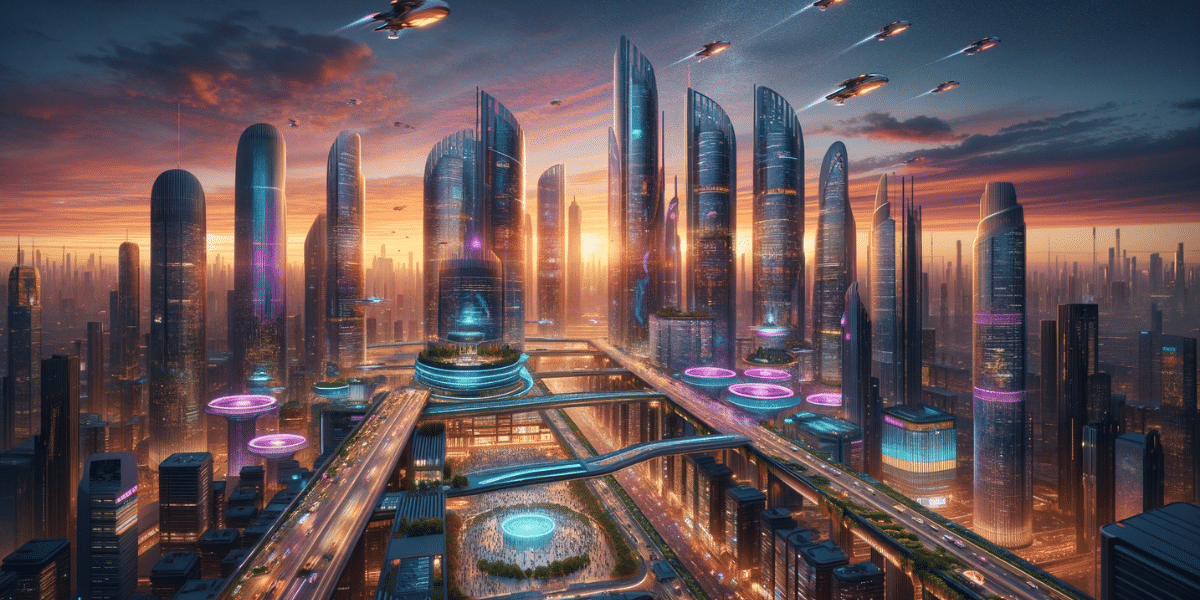
The Internet of Things (IoT) signifies a significant and revolutionary change in the worldwide technological environment, marking the emergence of a novel epoch in which the digital and physical domains intersect, cultivating a globally networked society where convenience and effectiveness are important. This groundbreaking paradigm has fundamentally transformed conventional ways of living, offering a wide range of advancements encompassing intelligent urban areas and residences, sophisticated pollution management, energy preservation, automated transportation, and industrial mechanization. The widespread use of intelligent, internet-connected technology has significantly altered the global landscape, facilitating effortless connection, communication, and secure information sharing.
The Origin of IoT and Its Significant Influence
The emergence of the Internet of Things (IoT) represents a significant milestone in the progression of technology, signifying a shift towards a more linked, intelligent, and interdependent society. This phenomenon serves as a tribute to humanity’s remarkable resourcefulness. Ordinary items are endowed with digital intelligence, enabling them to communicate and interact with one another and with human beings. Consequently, this development presents novel opportunities for innovation and enhanced convenience.
The fundamental essence of the Internet of Things (IoT) is around the smooth amalgamation of tangible items with internet connectivity, facilitating the exchange and analysis of data. The process of integration results in the development of intelligent environments, encompassing cities that effectively allocate their resources, residences that prioritize the comfort and safety of their inhabitants, industries that enhance production processes, and transportation systems that adjust to real-time circumstances to enhance safety and efficiency.
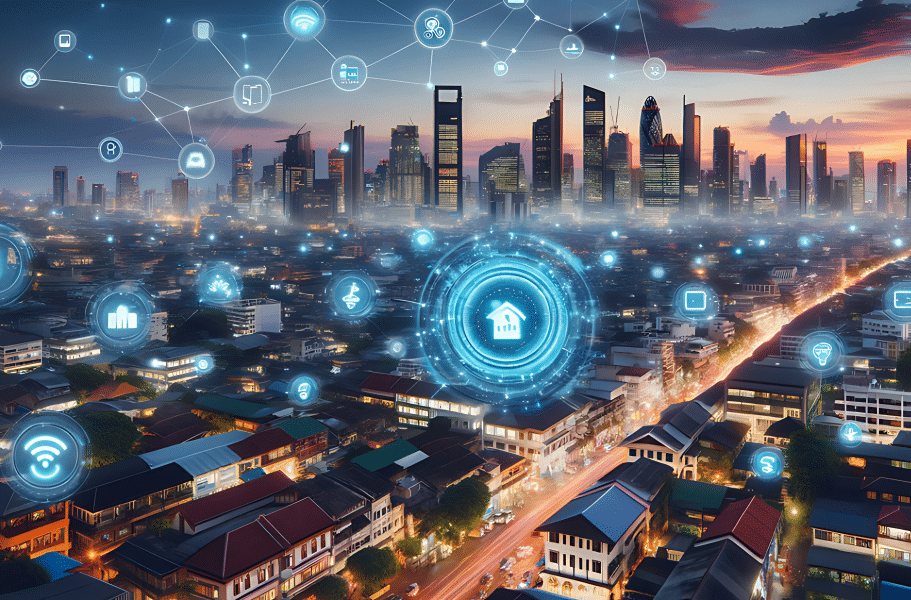
Photo Courtesy: Satishkumar Chintala
Navigating the Digital and Energy Revolutions: An Academic Perspective
Industry 4.0, the fourth industrial revolution, is defined by the integration of digital technology and energy systems, leading to a more sustainable, efficient, and linked global environment. The Internet of Things (IoT) plays a critical role in driving this change, as it encompasses several developing technologies, including data center computing, 5G networks, and artificial intelligence (AI). These technologies are instrumental in transforming power systems into intelligent, digital, and networked entities.
The current period is characterized by notable advancements in energy production, distribution, and utilization, with Internet of Things (IoT) technologies leading the way in improving the intelligence and effectiveness of power systems. Implementing IoT devices and systems in the energy industry allows for immediate monitoring and control of energy consumption, resulting in substantial waste reduction and enhancements in energy efficiency.
The Convergence of the Internet of Things (IoT) with Cloud Computing
The progress of the Internet of Things (IoT) is intrinsically linked to the development of cloud computing. Cloud technology offers the essential framework for acquiring, retaining, and examining the extensive quantities of data produced by Internet of Things (IoT) devices. This facilitates the creation of novel apps and services that may effectively utilize this data to generate value.
Cloud computing is crucial in facilitating the Internet of Things (IoT) by providing scalable and adaptable resources to accommodate the rapid expansion of IoT devices and applications. The integration of the Internet of Things (IoT) and cloud computing is crucial to fully harness the capabilities of IoT, facilitating the implementation of advanced applications that necessitate substantial computational capabilities and storage capacity.
The convergence of cloud computing with the Internet of Things (IoT) has given rise to novel paradigms, notably edge computing, which involves processing data in close proximity to its source of origin. This phenomenon leads to decreased latency, improved reaction times, and reduced bandwidth utilization, hence augmenting the efficiency and efficacy of Internet of Things (IoT) systems.
Transforming Industries and Societies: An Academic Perspective
The influence of the Internet of Things (IoT) extends beyond mere technological progress, bringing about substantial transformations in several sectors and aspects of society. IoT technologies facilitate the advancement of smart city urban planning and management systems, encompassing traffic control, waste management, energy distribution, and public safety, resulting in enhanced efficiency. Smart houses, integrated with Internet of Things (IoT) devices, provide residents with unparalleled comfort, convenience, and security. These homes automate routine tasks and deliver individualized experiences to their occupants.
IoT technologies play a crucial role in the industrial sector by enabling the shift towards smart manufacturing. This entails the integration of sensors and automation technology within factories to optimize production processes, boost product quality, and ensure worker safety. The transportation industry derives advantages from the Internet of Things (IoT) using the advancement of intelligent transportation systems, which enhance the movement of vehicles, alleviate traffic congestion, and enhance the safety and effectiveness of both public and private transportation.
The Prospects and Obstacles of the Internet of Things (IoT) in the Future
The Internet of Things (IoT) encounters various obstacles as it progresses, encompassing apprehensions about security, privacy, and the necessity for defined protocols to guarantee compatibility across multiple gadgets and systems. Resolving these difficulties is paramount to ensuring IoT technology’s sustained expansion and widespread adoption.
Notwithstanding these obstacles, the future of IoT has vast potential. The continuous advancement of 5G networks is anticipated to significantly augment the functionalities of Internet of Things (IoT) gadgets, facilitating expedited data transmission, reduced latency, and the interconnection of a greater quantity of objects. Incorporating artificial intelligence (AI) into the Internet of Things (IoT) expands its functionalities, facilitating advanced data analysis and decision-making procedures.
In summary, the Internet of Things (IoT) is a fundamental element of the fourth industrial revolution, facilitating unparalleled transformations in technology, industry, and society. As one explores the digital realm, incorporating IoT with cloud computing, AI, and 5G technologies can reveal fresh opportunities, revolutionizing lifestyles, professional endeavors, and interactions with the surrounding environment. The progression of IoT is ongoing; it is constantly advancing, expanding the limits of what can be achieved and influencing the trajectory of the digital realm.
Author Profile: SathishkUmar Chintala
Sathishkumar Chintala is an experienced IT professional with a tenure of more than 15 years. He currently holds the position of Senior Software Engineer, demonstrating exceptional proficiency in data engineering. With a focus on artificial intelligence (AI), machine learning (ML), and the creation of strategic IT solutions, his professional trajectory is characterized by groundbreaking advancements in the modernization of intelligent platforms and the improvement of product and service offerings in diverse industries such as healthcare, banking, and financial services.
The individual’s proficiency in the development, programming, and upkeep of applications is highly congruent with the firm’s goals, enabling significant improvements in operational effectiveness and customer contentment. Significantly, his leadership in efforts that have substantially decreased customer support call durations and optimized deployment procedures highlights his aptitude for implementing artificial intelligence (AI) and machine learning (ML) in pragmatic and influential manners.
Sathishkumar, who obtained a Bachelor’s degree in Electronics and Communication Engineering from Jawaharlal Nehru Technology University in Hyderabad, India, is a highly productive author of academic publications, including those published by IEEE. This underscores his commitment to furthering the domain of artificial intelligence and its utilization in healthcare and other domains.
Situated at the intersection of technology and innovation, Sathishkumar Chintala is strongly dedicated to creating solutions that address immediate operational obstacles and improve global healthcare outcomes. This commitment reflects a progressive mindset toward technology and its potential.
Published by: Martin De Juan